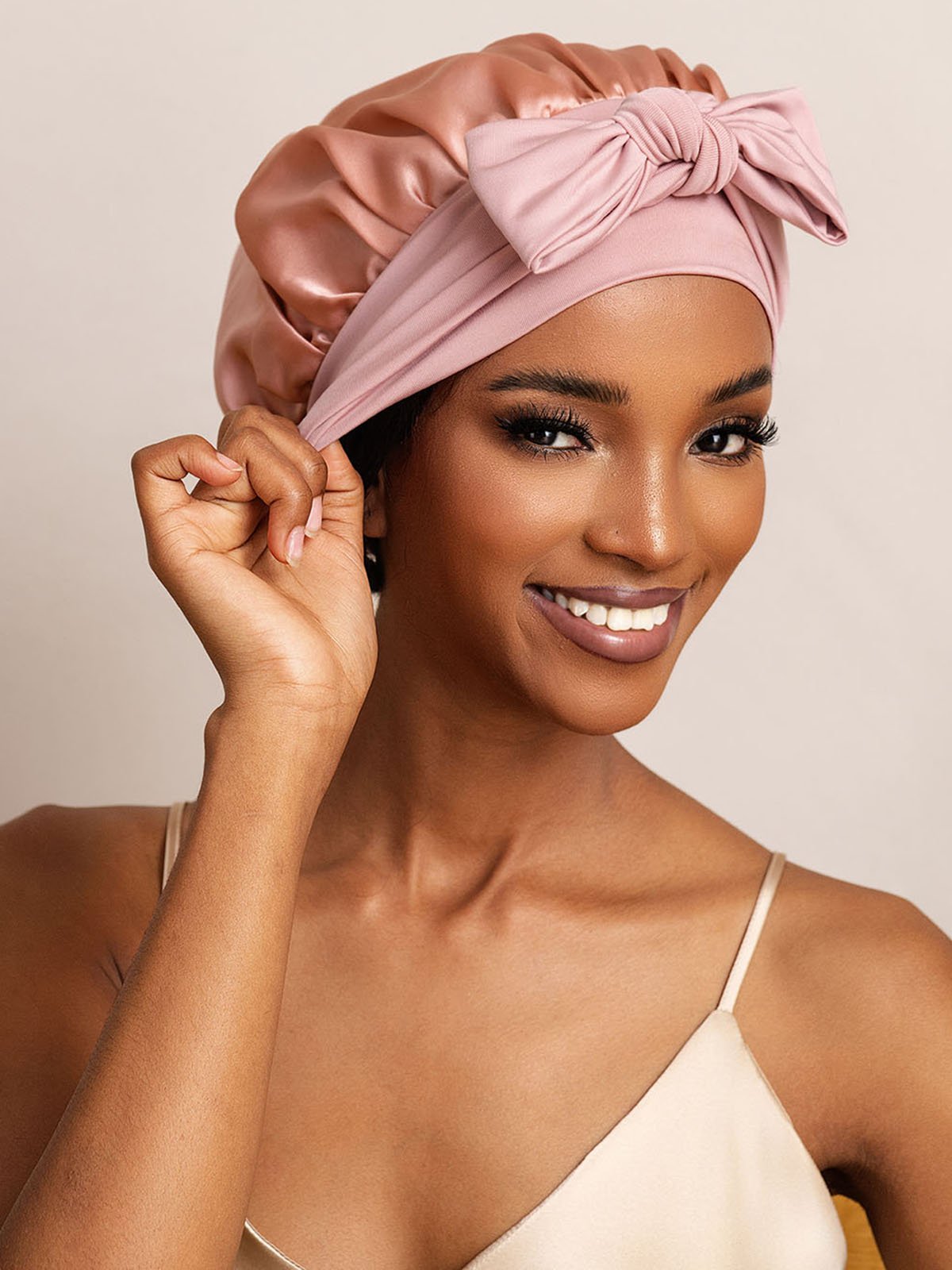


To wear a silk bonnet with bangs, set your fringe first and cover the rest of your hair second. Decide where you want your bangs to sit overnight, either forward or swept to the side, and prep them for that spot before the bonnet goes on. If you skip that step and just tuck everything in, the bonnet can bend or press the fringe out of the shape you want.
Once the fringe is set, gather the rest of your hair into your silk hair bonnet for sleeping. Then check where the band lands on your hairline before you lie down.
Arrange Your Fringe Before Putting on the Bonnet
Pick your overnight fringe position first because forward bangs and side-swept fringe require different prep, as outlined in a Makeup.com guide to sleeping with bangs.

For Dry Bangs You Want to Keep Forward
The guide suggests wrapping dry bangs around a medium or large hair roller before bed. Pick the size based on how long your bangs are. The roller should be secure enough to stay put while you sleep. According to the guide, this can help your bangs keep their shape and stop the fringe from tangling overnight. A roller adds some bulk at the front of your head. That means it only works under a bonnet that has room at the front for it.
For Side Bangs or Longer Fringe
Curtain bangs and other longer fringe get a different approach in the same guide. Sweep the hair to the side and hold it with a bobby pin. Pin the bangs at the ends, not near the root, so you don't wake up with a dent in the hair. It works best when you want your bangs to fall to one side the next morning.
Both options deal only with the fringe itself. Covering the rest of your hair is the next step, and you can do it without undoing this prep.
Cover the Rest of Your Hair
How you cover the rest depends on whether your bangs go inside the bonnet or stay on their own. If you're fine with the fringe going in with everything else, ShunSalon's inside-bonnet routine for straight hair does the whole job in one pass:
- Brush your hair and put in any hair products you normally use.
- Slide both hands inside the bonnet and stretch it open.
- Flip your hair upside down so it falls over your face. Then lean forward so the hair pools inside the bonnet.
- Pull the back of the bonnet over the nape of your neck. Stretch it over all of your hair, including your bangs.
- Adjust the elastic band so it sits straight along your hairline.
That routine was written for straight hair and an adjustable silk or satin bonnet. Flipping your head moves your bangs along with everything else. So it fits best when you're happy for the fringe to go inside with the rest of your hair, not when you've just rolled or pinned it into a set position.
Did you prep your fringe separately? Then handle the hair behind it on its own. An Ipsy guide to hair bonnets quotes hairstylist Ikeyia Powell, who suggests gathering your hair at the crown. She says to tie it loosely with a soft hair tie to prevent kinks or indentation marks. Then slide the cap over the gathered hair and make sure every strand is tucked in. That advice is general bonnet guidance, not specific to bangs. Still, it gives you a way to cover the back and sides without reaching forward to the fringe you just set.
The amount of hair you gather also changes how much room is left at the front. If a full ponytail or bun fills your silk sleep bonnet snugly, our guide to bonnet volume and coverage helps you match the cap to your hairstyle. That way there's still space near your forehead.
Check the Bonnet Edge
The bonnet edge is the last thing that touches your bangs, so check it in a mirror before you lie down. Look at three things:

- Band position: The ShunSalon routine ends with the band sitting straight on the hairline. If it's crooked or riding down over your fringe, lift it and seat it straight along the hairline again.
- Band tension: Powell warns against tying a bonnet too tightly, because the tension defeats the purpose of protecting your hair. If the band feels tight across your forehead, loosen the tie or the adjustable band a little.
- Fringe position: Check whether the band sits directly over or presses against your arranged fringe. Our current reference guides do not provide a realignment procedure once a bonnet is on, but checking this placement before sleeping helps verify your fringe is not trapped beneath elastic tension.
These checks are about how things look at bedtime. If your silk hair bonnet for sleeping keeps sliding around during the night, the problem is fit, not fringe placement. Our article on bonnet fit and slipping covers band tension, hair length, and bedtime habits.
FAQs
Can Bangs Be Left Outside a Silk Bonnet?
Our current sources document tucking bangs inside the bonnet for straight hair, but they do not confirm a method for leaving bangs outside a silk bonnet. General fringe-prep advice (such as using a roller or side pin) is designed for overnight hold on its own, without addressing bonnet placement.
Can Bangs Be Placed Inside a Silk Bonnet?
Yes. ShunSalon's inside-bonnet example for straight hair stretches an adjustable silk or satin bonnet over all the hair, bangs included, and then sets the band straight on the hairline. Keep in mind that this example was written for straight hair. Curly or textured fringe may need a different approach.
What Should You Check if the Bonnet Shifts Overnight?
If the bonnet moves during the night, look at fit first. Check whether the band is snug enough to stay on, whether the cap has enough room for your hair length, and whether the band still sits on your hairline in the morning. Avoid fixing it by cranking the band tight, since Powell notes that too much tension works against protecting your hair.
Is a Silk Hair Bonnet for Sleeping Worth It if You Have Bangs?
That comes down to what you want it to do for the rest of your hair, since bangs only change how you handle the front. Our guide on whether silk bonnets are worth buying explains the breakage, frizz, and style-protection reasons people wear one, plus tips for choosing and wearing a bonnet.