
![[Light Blue] SilkSilky Long Sleeve Lapel Collar Women's Pajamas 001](http://silksilky.com/cdn/shop/files/769307169_746adca2-e8a1-4b7e-8044-841ce2a12cb2.jpg?v=1770797401&width=1200)
![[Light Blue] SilkSilky Long Sleeve Lapel Collar Women's Pajamas 002](http://silksilky.com/cdn/shop/files/915803379_1c7f9174-b2a2-4a26-ab6f-9f2cef870e94.jpg?v=1770797408&width=1200)
![[Light Blue] SilkSilky Spaghetti Strap Camisole Set 001](http://silksilky.com/cdn/shop/files/448538763.jpg?v=1781078396&width=1200)
![[Light Blue] SilkSilky Spaghetti Strap Camisole Set 002](http://silksilky.com/cdn/shop/files/1177323466_89706a55-35c5-45d0-bce7-d55dd4719d36.jpg?v=1781078396&width=1200)
![[Pink] SilkSilky Sleep Cap 001](http://silksilky.com/cdn/shop/files/SilkSilky_Pure_Silk_Sleep_Cap_Pink_001_C-250529006.jpg?v=1762221980&width=1200)
![[Pink] SilkSilky Sleep Cap 002](http://silksilky.com/cdn/shop/files/1738767123_1282c43b-9916-42b4-90f1-1050ec5516b3.jpg?v=1768284813&width=1200)
![[Dark Blue] SilkSilky Long Sleeve Shawl Collar Women's Pajamas 001](http://silksilky.com/cdn/shop/files/aea9906167f4a625b4d90a880cc9ca88.jpg?v=1792055081&width=2000)
![[Dark Blue] SilkSilky Long Sleeve Shawl Collar Women's Pajamas 002](http://silksilky.com/cdn/shop/files/477af4ed80b54f4f50c78ce975682f64.jpg?v=1792055132&width=2000)
![[Beige] SilkSilky Long Sleeve V Neck Women's Long Johns 001](http://silksilky.com/cdn/shop/files/4e4d7917a32a8895bb85b2f86b47b08d.jpg?v=1792055158&width=2000)
![[Beige] SilkSilky Long Sleeve V Neck Women's Long Johns 002](http://silksilky.com/cdn/shop/files/e8b12239b85cff50683f528f7ea039fd.jpg?v=1792055205&width=2000)
![[Light Pink] Woman wearing pink Mulberry Silk bonnet with long adjustable ties, holding matching silk fabric 001](http://silksilky.com/cdn/shop/files/1536474303.jpg?v=1784192213&width=1200)

![[Blue and White Porcelain] SilkSilky Sleep Cap 001](http://silksilky.com/cdn/shop/files/1675816930.jpg?v=1784190533&width=1200)
![[Blue and White Porcelain] SilkSilky Sleep Cap 002](http://silksilky.com/cdn/shop/files/1606685588.jpg?v=1784171561&width=1200)
![[Pale Mauve] SilkSilky Sleep Cap 001](http://silksilky.com/cdn/shop/files/929351451.jpg?v=1784184561&width=1200)
![[Pale Mauve] SilkSilky Sleep Cap 002](http://silksilky.com/cdn/shop/files/Pale_Mauve_SilkSilky_Pure_Silk_Sleep_Cap_002_C-230605009.jpg?v=1762227264&width=900)
![[Pale Mauve] SilkSilky Sleep Cap 001](http://silksilky.com/cdn/shop/files/868087640.jpg?v=1784194351&width=1200)
![[Pale Mauve] SilkSilky Sleep Cap 002](http://silksilky.com/cdn/shop/files/1666933474_b88ba1e8-2788-4d77-959d-70e35887276e.jpg?v=1770190435&width=1200)
![[Pink] SilkSilky Sleep Cap 001](http://silksilky.com/cdn/shop/files/679772436.jpg?v=1784192172&width=1200)
![[Pink] SilkSilky Sleep Cap 008](http://silksilky.com/cdn/shop/files/1103712381_7b2570ba-9ebf-418e-86df-c662f2c0d8df.jpg?v=1770086158&width=1200)
![[Multi] SilkSilky Sleep Cap 001](http://silksilky.com/cdn/shop/files/460104059.jpg?v=1784182054&width=1200)
![[Multi] SilkSilky Sleep Cap 002](http://silksilky.com/cdn/shop/files/1955204957.jpg?v=1773821477&width=1200)
![[Pink] SilkSilky Sleep Cap 001](http://silksilky.com/cdn/shop/files/828162455.jpg?v=1787036833&width=1200)
![[Pale Mauve] SilkSilky Sleep Cap 001](http://silksilky.com/cdn/shop/files/2130782833.jpg?v=1784192965&width=1500)
![[Pale Mauve] SilkSilky Sleep Cap 002](http://silksilky.com/cdn/shop/files/722878458.jpg?v=1781513140&width=1200)
![[Pale Mauve] SilkSilky Hair Towel Wrap 001](http://silksilky.com/cdn/shop/files/1995562774.jpg?v=1775212387&width=1500)
![[Pale Mauve] SilkSilky Hair Towel Wrap 002](http://silksilky.com/cdn/shop/files/641090472.jpg?v=1775212389&width=1500)
![[Black] SilkSilky Sleep Cap 001](http://silksilky.com/cdn/shop/files/Black_SilkSilky_Pure_Silk_Sleep_Cap_001_C-210718002.jpg?v=1762223570&width=1200)
![[Black] SilkSilky Sleep Cap 002](http://silksilky.com/cdn/shop/files/Black_SilkSilky_Pure_Silk_Sleep_Cap_002_C-210718002.jpg?v=1762223570&width=1200)
![[Dark Blue] SilkSilky Sleep Cap 001](http://silksilky.com/cdn/shop/files/926283073.jpg?v=1776411536&width=1200)

![[Pale Mauve] SilkSilky Sleep Cap 001](http://silksilky.com/cdn/shop/files/695202307.jpg?v=1776411654&width=1200)
![[Dark Blue] SilkSilky Sleep Cap 001](http://silksilky.com/cdn/shop/files/335862311.jpg?v=1784190200&width=1200)
![[Dark Blue] SilkSilky Sleep Cap 002](http://silksilky.com/cdn/shop/files/344740832.jpg?v=1775619306&width=1200)
![[Light Blue] SilkSilky Sleep Cap 001](http://silksilky.com/cdn/shop/files/10268a92c5373ee961d6f4a030db89eb_d892d8ca-be84-4047-9184-09989dc9c43d.jpg?v=1763030264&width=1200)
![[Beige] SilkSilky Sleep Cap 001](http://silksilky.com/cdn/shop/files/1318302369.jpg?v=1784193305&width=1200)
![[Beige] SilkSilky Sleep Cap 002](http://silksilky.com/cdn/shop/files/1333929508.jpg?v=1775618810&width=1200)
![[Black] SilkSilky Sleep Cap 001](http://silksilky.com/cdn/shop/files/Black_SilkSilky_Pure_Silk_Sleep_Cap_001_C-210922011.jpg?v=1752671162&width=1200)
![[Black] SilkSilky Sleep Cap 002](http://silksilky.com/cdn/shop/files/Black_SilkSilky_Pure_Silk_Sleep_Cap_002_C-210922011.jpg?v=1752671163&width=1200)
![[Pale Mauve] SilkSilky Sleep Cap 001](http://silksilky.com/cdn/shop/files/b6159e8e88f53fa1a4d72ca6155e88ed.jpg?v=1762940190&width=1200)
![[Pale Mauve] SilkSilky Sleep Cap 005](http://silksilky.com/cdn/shop/files/c8e4e6fe0a4f32f1077ecdc97fa1d3f8.jpg?v=1762940190&width=1200)
![[Black] SilkSilky Sleep Cap 001](http://silksilky.com/cdn/shop/files/284812792.jpg?v=1784183611&width=1200)
![[Black] SilkSilky Sleep Cap 002](http://silksilky.com/cdn/shop/files/1254707498.jpg?v=1778655242&width=1200)
Silk Bonnets & Sleep Caps: Choose by Shape, Not by Size Label
Every one is listed as a single size, but they are not a single shape: measured cap depth across this collection runs from 21 cm to 62 cm. Choosing the right family matters far more than choosing the right colour.
What a Silk Bonnet Actually Does
Overnight damage to hair is mostly friction. A cotton pillowcase catches the cuticle every time you turn, and it absorbs the oils and product that were supposed to stay on your hair.
- Less friction, less breakage: A smooth protein fibre lets hair slide instead of snagging — the reason bonnets are recommended for fragile, curly and chemically treated hair.
- Moisture stays in the hair: Silk absorbs far less than cotton, so leave-in conditioner and natural oils are not wicked into the pillow.
- Less frizz and static: Reduced friction means fewer lifted cuticles in the morning.
- Style holds longer: Curls, braids and blowouts survive the night with less reshaping.
Choose by Shape, Not by Size Label
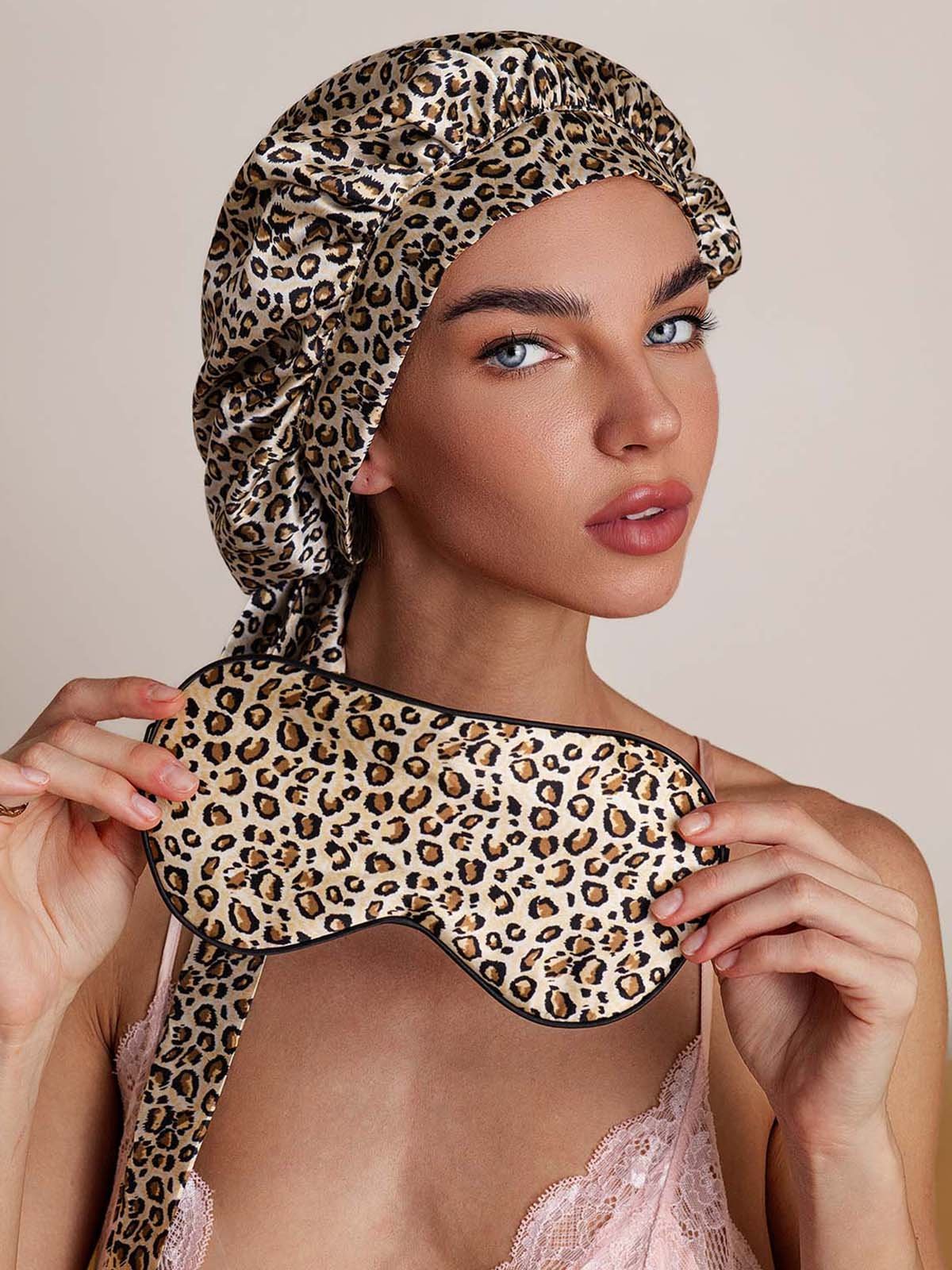
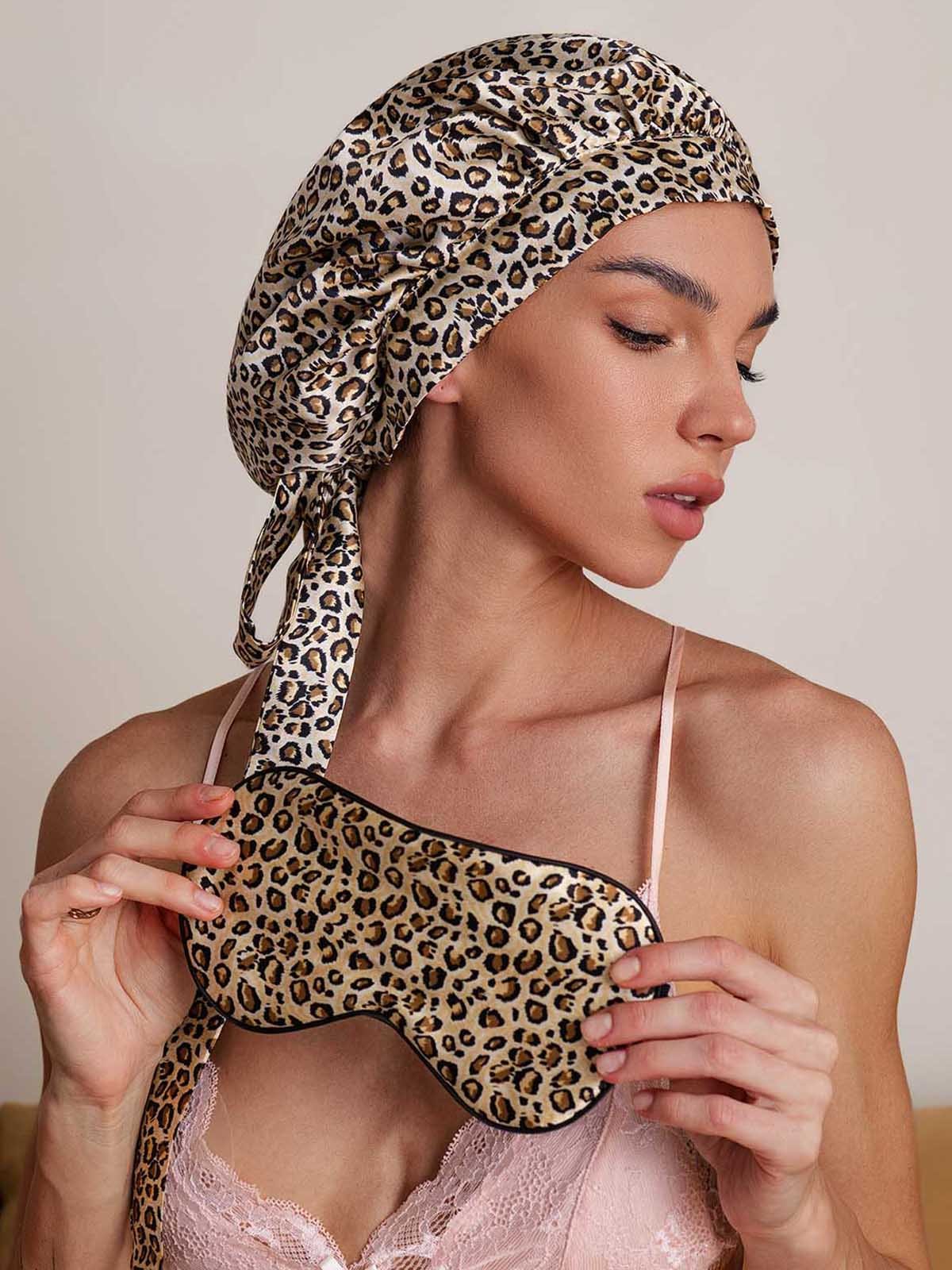
This is the part most buying guides skip. All twenty are labelled one size, but the four families below fit genuinely differently — and picking the wrong one is behind almost every complaint we see.
| Family | Measured Depth | Best For |
|---|---|---|
| Long adjustable ribbons | Standard cap, ties to your own head | The safest first bonnet. You set the tension yourself, so it adapts to most head sizes and hair volumes. |
| Elastic band | Standard cap, fixed band | Shorter or finer hair, and anyone who wants it on in one motion. |
| Extra-long | 57–62 cm | Thick, long, curly or braided hair that a standard cap cannot hold. |
| Knot-front turban | 21 cm — the most compact here | Fine or short hair, and a flatter profile in bed. |
If you are unsure, start with a long-ribbon style — it is the only family that adjusts to you rather than the other way round. If you have a lot of hair, go straight to the extra-long shapes; a compact turban will not hold it, no matter how it is tied.
Bonnets and Greasy Hair
This is the most common worry about bonnets, and the honest answer has two halves.
A clean silk bonnet does not add oil. Silk absorbs far less than cotton, so it takes less of your hair's natural oil and less of your product overnight — which is why hair often looks less flat in the morning.
A bonnet you have not washed does the opposite. Oil, dry shampoo and styling product build up on the lining and transfer straight back onto clean hair. Wash it every one to two weeks, more often if you use heavy products. Nearly every "bonnets made my hair greasy" report traces back to this.
Straight and Fine Hair
Bonnets are most associated with curly and textured hair, but straight and fine hair benefits for a different reason: it is not fighting frizz overnight so much as friction, static and the small breakages that come from turning against cotton.
Choose a smaller cap. The compact knot-front and elastic styles hold fine hair without the volume of fabric that makes a bonnet slide on a smaller head. The 57–62 cm shapes are more than fine hair needs. Silk bonnets for straight hair covers the case in full.
Wearing One With Wet Hair
Damp is fine; soaking is not. Silk does not absorb much water, so a genuinely wet head stays wet inside the bonnet — and hair is at its most fragile when saturated.
Towel-dry or rough-dry to damp first, then put the bonnet on. If you wash at night regularly, the silk hair towel wrap in this collection is made for exactly that step, and the bonnet goes on afterwards. Sleeping in a silk bonnet with wet hair has the routine.
Silk or Satin
Silk is a fibre; satin is a weave, and most satin bonnets are woven polyester. Both are smoother than cotton, which accounts for most of the benefit, and satin costs a fraction of the price.
The difference shows up in heat and moisture: polyester holds both against the scalp, silk moves them away. That matters if you sleep warm or have a sensitive scalp, and silk keeps its smooth surface longer before it roughens with washing. Satin bonnet vs silk bonnet compares them directly.
Washing a Silk Bonnet
Hand wash below 35°C with a mild silk detergent. Press and swirl gently — never rub, wring or twist, and do not stretch the elastic while it is wet. Rinse cool, press the water out in a towel and dry flat in the shade. Keep it away from bleach, enzyme detergents, the tumble dryer and direct heat.
Match the shape to your hair first. Everything else about a bonnet is a detail.


