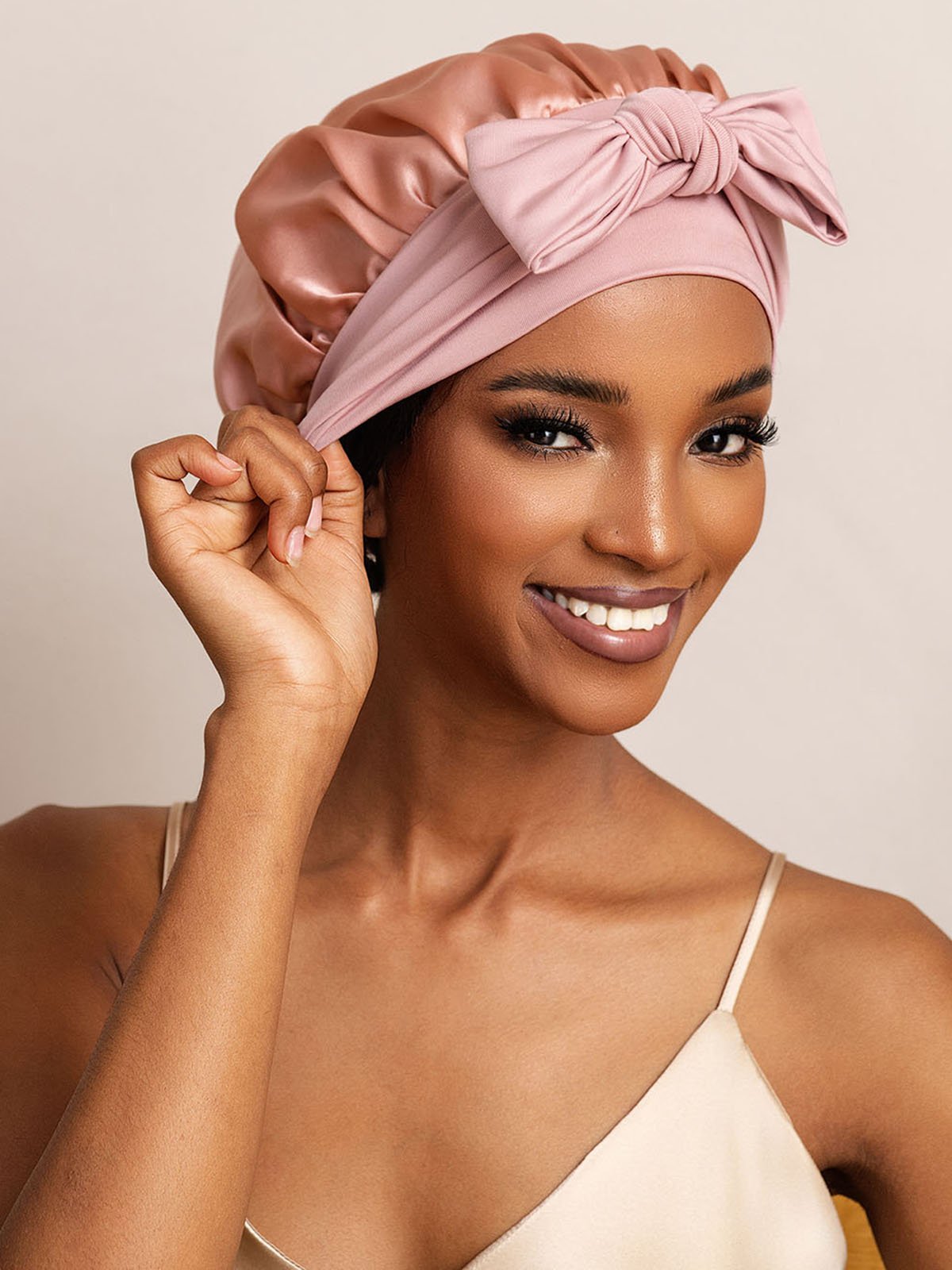


There's no tested yes-or-no answer to whether you can sleep with hair clips under a silk bonnet. The bonnet covers the clip, but it doesn't stop the clip from pressing on your scalp or catching your hair. Whether it works for you depends on the clip's shape, where it sits, and how you sleep.
That makes it a personal call, not a rule. A short check in your usual sleep position before lights out can tell you whether to keep the clip, move it, or take it out.
Can You Wear Hair Clips Under a Silk Bonnet to Sleep?
You can try it, but treat it as a personal comfort check rather than a guaranteed overnight routine.
Here's the main thing to remember: a silk hair bonnet for sleeping is a cover, not a cushion. The fabric is smooth and thin, so a clip that presses into your head on a bare pillow can still press under the cap. An edge that grabs strands can still grab them, and it may catch on the bonnet's fabric too.
Some general bedtime advice points in the same direction, though it isn't about bonnets. Healthline's general bedtime guidance on metal clips for long hair says to avoid metal clips and elastics. It also says not to pull hair so tight that it puts pressure on the scalp while you sleep, and it suggests a softer tie such as a satin scrunchie. That guide covers sleeping with long hair in general. It doesn't look at clips under a silk bonnet, so use it as background, not as a verdict on your setup.
How Clip Shape and Placement Affect Contact
Two things decide where you're likely to feel a clip: how far it sticks out and where it sits when your head is on the pillow. Look at each one on its own, because a flat clip in the wrong spot can bother you as much as a bulky clip in a good spot.
Clip Profile
Start with how much the clip rises off your head. A flat, low clip sits close to the scalp. A tall clip, or one with teeth, hinges, or a raised decoration, makes a bump under the bonnet. When you lie down, that bump is what meets the pillow first. Exposed edges, seams, and small gaps in a clip's hinge are also places where hair or fabric could get caught. This is just looking at the shape, not a tested ranking of clip types. Still, it tells you what to watch for. Anything bulky under the cap works the same way, and our guide to choosing a bonnet for wigs walks through measuring overnight bulk and checking edge pressure.
Placement Relative to Pillow Contact
Where the clip sits matters as much as its shape. If you sleep on your back, the back of your head carries most of your weight on the pillow. Side sleepers rest on the side of the head and around the ear. A clip sitting in your own usual contact area gets pressed between your head and the pillow. A clip sitting outside it may barely touch anything. No spot on the head is safe or unsafe for everyone. It depends on how you lie, so map placement against your own sleep habits instead of a general rule.

How to Check for Pressure or Snagging Before Bed
Test the setup exactly as you'll sleep in it, with the clip in and the bonnet on. If you feel clear pressure or catching, change the setup before you fall asleep instead of hoping the bonnet will soften it.
- Put your clips in where you plan to wear them, then pull the bonnet on over them.
- Lie down in your usual sleep position and stay there for a minute or two.
- Notice whether any clip digs in, makes a hard spot, or feels like it's pushing against the pillow.
- Turn your head gently and feel whether a clip tugs on your hair or grabs the inside of the bonnet.
- If a clip presses or catches, move it away from the area that meets the pillow and check again. If it still bothers you, take it out and secure your hair a gentler way.
A comfortable check covers one position for a short time. It can't promise the whole night will feel the same, especially if you move a lot in your sleep. Be firmer about pain. The AAD advice on scalp irritation is to remove a hairstyle right away if it causes pain or irritates your scalp. When you cover your hair, the American Academy of Dermatology also advises pulling it back loosely underneath. That guidance is about hairstyles in general, not clips at night. It still gives you a clear stop point: if the setup hurts or irritates, change it.
FAQs
Is a claw clip okay to wear under a bonnet overnight?
The evidence reviewed here does not show whether claw clips, snap clips, or any other type is safe or unsafe under a bonnet at night. What you can judge is how the clip is built. A larger claw clip usually stands farther off the head, so it can make a bigger bump wherever it meets the pillow. If you want to keep one in, place it away from the part of your head you rest on and see how it feels.
What happens if I roll into a different position during the night?
A clip that felt fine on your back may sit right under you once you turn onto your side. Your pre-bed check only covers the position you tested. If you know you switch sides often, try a spot that stays clear of both positions, or skip clips on those nights. A soft tie can hold hair without a hard piece, and you can find silk hair scrunchies in our silk accessories collection.
Should the bonnet fit tighter to hold my clips in place?
No. A tighter cap can add its own pressure on top of the clip. A clinical review of nighttime hair practices notes that silk bonnets are often recommended for hair care at night, but there isn't evidence-based data behind that. The same review says tight head wraps at night can contribute to traction hair loss in people who have other risk factors. Our tips on a secure bonnet fit for long hair focus on keeping it on without over-tightening.
What if I only use a clip to keep my bonnet from slipping off?
In that case the clip is fixing a fit problem, and a better fit may let you drop it. Size, band style, and how you put the bonnet on all affect whether it stays put. Our routine for keeping a bonnet secure on fine hair covers fit and placement steps. If you still use a clip as a backup, run it through the same pressure check as any other clip.