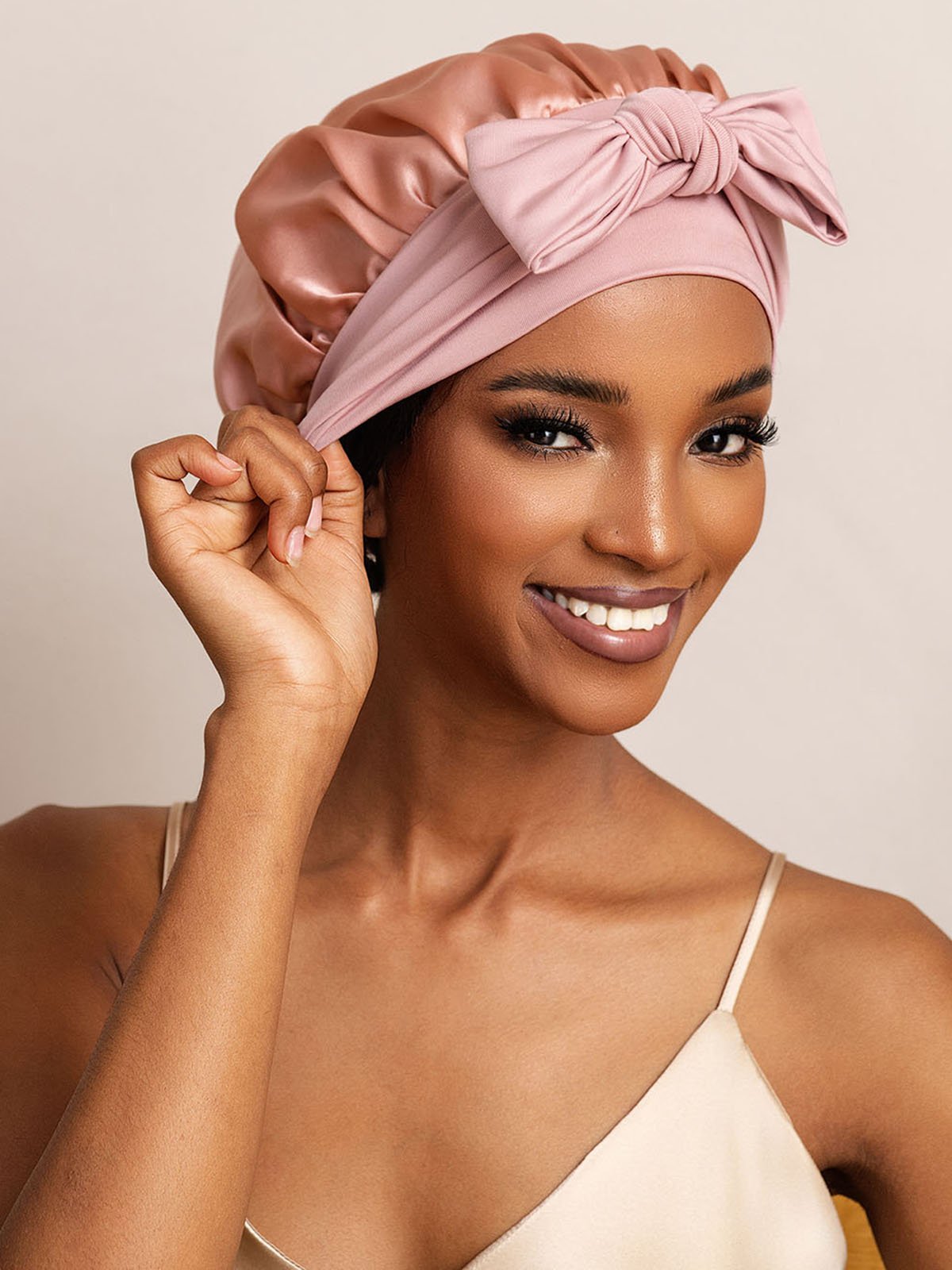


Yes, you can wear a silk scarf under a winter hat as a layer between your hair and the hat. It works when the scarf covers the hair you want covered and the hat still sits comfortably and stays put over it. The scarf adds fabric, though, so try the two layers together before you head out into the cold.
Key Takeaways
- Protective layer: A silk scarf provides a smoother surface against your hair, but it does not guarantee complete protection from breakage, frizz, or hat hair.
- Fit priority: Check that the hat remains comfortable without extra pressure on your forehead, hairline, or scalp.
- Loose styling: Keep hair pulled back loosely beneath the wrap to avoid tension and rubbing.
- Quick adjustments: If the hat feels tight or unstable, shift knot placement lower or switch to a smaller, flatter wrap.
Can You Wear a Silk Scarf Under a Winter Hat?
Yes, if both layers fit well together. A silk head scarf sits against your hair, and the hat goes over it. That way your hair touches smooth silk instead of the inside of the hat.
The material matters for a reason. AAD guidance on silk or satin hair coverings says a head covering made of silk or satin is gentler on hair than coverings made of other materials. That advice covers hair coverings in general. It doesn't test a scarf worn under a winter hat. So think of the scarf as a gentler layer, not a promise that your hair won't get frizz, breakage, or hat hair.
Before you tie anything, decide what you want the scarf to cover. It might be your whole head, your hairline and edges, your crown, or the ends of a bun. That choice is your coverage goal, and it shapes how much fabric you need under the hat.
The kind of hat matters too. A close-fitting knit hat has less room inside, so even a thin layer of silk can change how it feels. A roomier hat has more space. But a bulky wrap or a big knot can still push it up or tip it to one side. Neither hat style is a sure yes or a sure no. The real answer comes from trying your scarf with your hat.
How to Check the Scarf-and-Hat Fit
Test the exact scarf, wrap style, and hat you plan to wear, because neither one tells you much on its own. Go through these steps in order in front of a mirror:
- Set your hair and scarf the way you'll actually wear them. Arrange your hair loosely, then wrap the silk head scarf in your usual style, with the knot where you normally put it.
- Put on the hat you plan to wear outside. Pull it on the way you would on a cold morning, not more gently than usual.
- Check coverage. Look and feel along the hat's edge. The hair you meant to cover should still be under silk, with no sections slipping out to rub against the hatband.
- Check comfort. Notice any new pressure at your forehead, temples, or the back of your head. Also watch for pulling at your hairline or a knot pressing into your scalp.
- Move like you normally would. Turn your head, look down, pull a coat collar up, and walk around the room. Watch whether the hat rides up or whether the scarf bunches or slides under it.
- Make the call. If your hair stays covered, the hat feels comfortable, and both layers stay in place, the pairing passes. If any of those three fail, go to the fixes below before you wear it outside.

This check is about daytime wear under a hat. If you also want a silk covering that stays on through the night, fit, fabric, and closure all play a role. Our guide on choosing a bonnet that stays on covers that separately.
What to Adjust If the Layers Feel Tight or Unstable
Start with the scarf, since it's usually easier to rewrap than to replace the hat. If the pairing still feels wrong after a flatter wrap, change the hat or skip that combination. Match the fix to what you noticed during the check:
- The hat feels tight. Loosen the wrap or use fewer passes of fabric so the silk lies flat instead of doubled up. Don't make room by pulling your hair back harder. According to AAD guidance on rubbing and tight hairstyles, constant rubbing from a hat, head scarf, or other covering can lead to traction alopecia, a type of hair loss caused by pulling, especially when hair is pulled back tightly before it's covered. Keep your hair loose under both layers.
- You can feel lumps or bulk. Smooth out folds and tuck the scarf ends flat against your head. If a full-size scarf still leaves too much fabric, a smaller square has less material to fold. For example, our roughly 21-inch silk square is smaller than our 26.8-inch printed silk square. When you're comparing other scarf sizes and shapes, our silk accessories collection puts them in one place.
- A knot presses or pushes the hat up. Move the knot away from where the hatband sits. Try it lower at the nape of your neck or off to one side, then tuck in the tails.
- The hat rides up or the scarf slides. First rewrap more flatly and make sure the knot isn't propping up the hat. If the layers still shift, try a roomier hat. If that doesn't work either, choose a different covering for that hat.
- Your hairstyle itself takes up the space. Thick hair, puffs, and buns can fill a hat before any silk goes in. Our guide to fitting coverings over thick hair explains how to match hairstyle bulk to the room inside a covering.

FAQs
Will a silk scarf fit under a snug beanie?
Often it can, but it depends on how much your beanie stretches and how much fabric you wrap. A single flat layer with the knot moved low gives a close-fitting beanie the best chance. Put the beanie on over the wrap and move around for a minute. If the band digs in or the beanie creeps up, go flatter or switch to a looser hat.
Does wearing silk under a hat guarantee my hair is protected?
No. Dermatologists' advice on silk and satin coverings says they're gentler on hair than other materials, but that advice wasn't written about scarves under winter hats. Silk gives your hair a smoother layer to rest against. It can't promise you'll avoid hat hair, frizz, or breakage.
How loose should my hair be under the scarf?
Loose enough that nothing pulls at your hairline or scalp once the hat is on. The AAD's tip on covering hair is to pull hair back loosely beneath a covering, because tight styles plus constant rubbing can lead to traction alopecia. For long hair or braids, our tips on covering long hair without over-tightening show ways to keep a covering secure without adding tension.