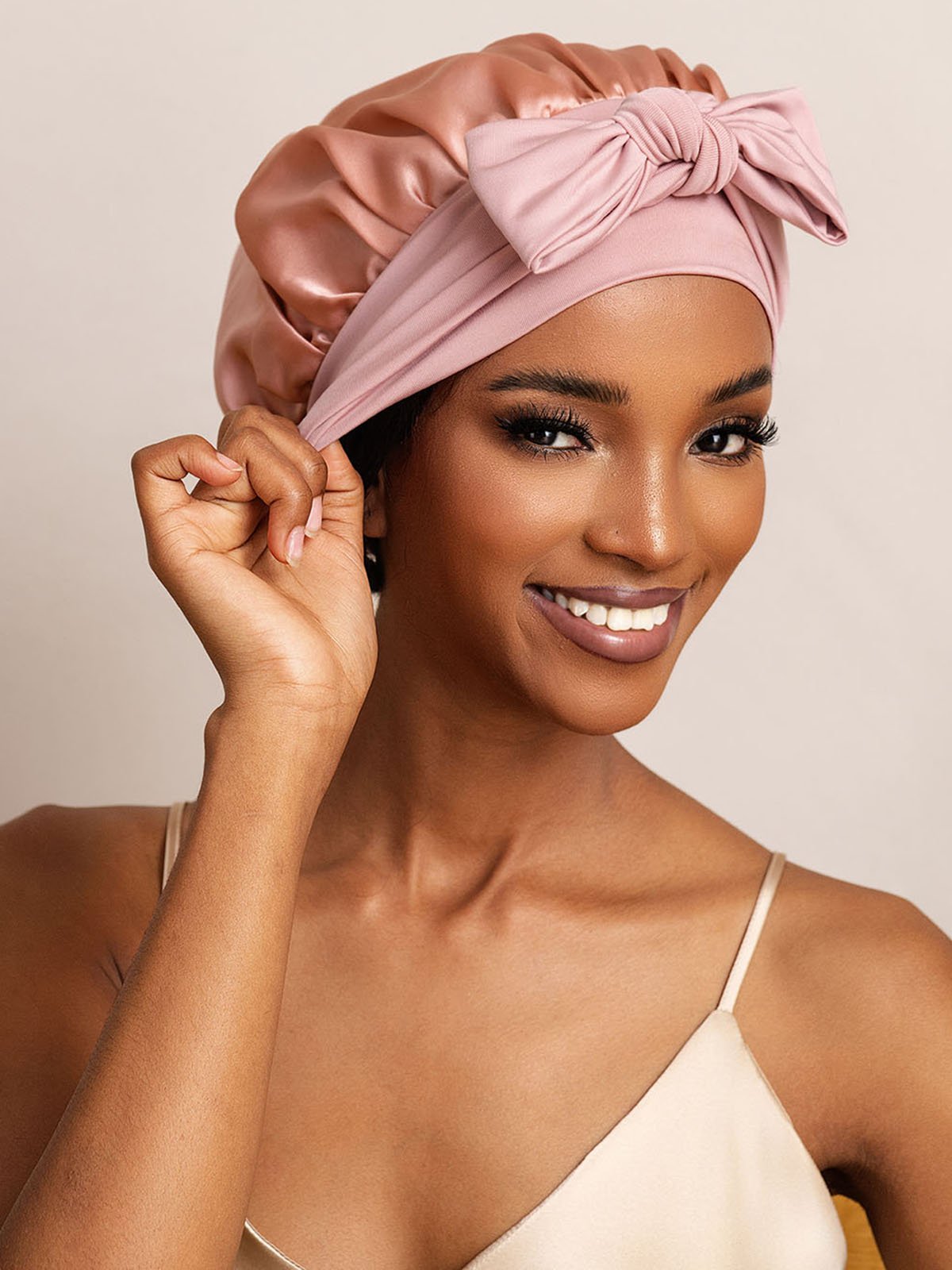


Neither a silk bonnet nor a silk head scarf is the right pick for every pinned hairstyle. Choose a bonnet if it has room for your raised or clustered pins and covers everything you want covered. Choose a scarf if you can wrap it around the areas that need coverage without pressing on raised spots or moving the style.
Think of this as a fit rule you try on your own hair. It is not a promise of hold or protection.
The Short Answer: Match the Cover to the Pinned Shape
Start with the format that matches how much of the style you want covered, then make sure it has room for the pins. A bonnet holds the whole style inside one shape. A silk head scarf is wrapped and tied around the hair, allowing you to choose where the fabric goes and how snug it sits.
That gives you two places to start. If all your hair and pins should sit inside one cover, try a bonnet first. Just make sure it has enough room that the raised pinned areas aren't pushed flat. If only some areas need covering, or a bonnet would press down on where your pins sit, try a scarf first and wrap it around those spots.
The name on the label won't decide this for you. A roomy bonnet and a snug one sit differently over the same pins. The same goes for a scarf tied loosely versus one tied tight.
Read the Pin Profile and Placement
Before you pick a cover, check your finished style in a mirror. Look for two things: how high the pins sit and where they are.
- Low-profile areas: Pins lie flat against the hair and don't stick up past the surface of the style.
- Raised areas: Pins, or the sections they hold, sit higher than the rest of the style. A pinned bun or a pinned curl is a good example.
- Clusters: Several pins are grouped in one spot instead of spread across the head.
- Crown: Pins sit on the top or upper back of the head. Whatever cover you choose will rest on this spot.
- Sides: Pins sit above or behind the ears. This is often where a scarf wraps around or a bonnet's edge falls.
- Hairline: Pins sit along the front edge. The band of a bonnet or the first pass of a scarf lands close to them.
Use these notes when you compare the two covers. Low, spread-out pins don't ask much of the cover's shape. A raised cluster at the crown means the cover needs room right there. Pins at the sides or hairline mean the edge of the cover sits close by. So picture where a bonnet's band or a scarf's knot would land before you put either one on.

Match the Coverage to the Style
Coverage is separate from pin height, so first decide how much of the style you want under fabric. If you want the whole style covered from hairline to nape, a bonnet's one-piece shape matches that goal. If you only want some areas covered, a silk head scarf lets you place the fabric just there.
Here's an illustrative example. An updo pinned all over may call for full coverage. A style with pins only at the nape may need just a band of fabric around the back.
Curly-hair guidance from Byrdie shows both approaches. One is a silk or satin scarf wrapped around the sides and back of a loose pineapple, a high, loose ponytail on top of the head. The other is a loose bonnet as an overnight option, with a long, loose back suggested so longer hair can gather inside. That example is about curls, not pins. Still, it shows the trade-off: the scarf targets certain areas, and the bonnet holds everything in one space.
If a scarf fits your coverage goal, our scarf tying guidance walks through choosing and tying one for hair coverage. Size and shape matter too. A large square and a long rectangle give you different amounts of fabric to wrap around a pinned area. So compare silk scarf shapes and use these scarf fold and size ideas to plan the wrap before you tie it.
Do One Practical Fit Check
Try the cover on over your finished style before you wear it for the night. This is a comfort and fit check on your own hair, not a safety test.
- Put the cover on the way you plan to wear it, with all the pins in place.
- Run your hand lightly over the raised areas and clusters. If a pin pushes into your scalp, or the fabric flattens a raised section, the cover is pressing on that spot.
- Check the mirror. If sections have slid or pins have moved, the cover is shifting the style.
- If either happens, adjust first. Loosen the scarf, move the knot away from the pin cluster, or try a roomier bonnet. If adjusting doesn't fix it, switch to the other format.

If the cover passes while you're sitting up, it's a reasonable one to try overnight. If you wake up with a pin pressing or the style moved, use the other format the next night.
Whether to keep pins in at night depends on the style. For a smooth, straight look, Healthline describes adding long bobby pins to wrapped hair to make the wrap more secure. The same Healthline guide warns against pulling hair so tightly against your head that it puts pressure on your scalp while you sleep. For curly hair, a stylist quoted by Byrdie recommends removing clips, tight bands, and pins before an overnight routine. If you take the pins out, our overnight silk routine for curls covers the bonnet side of that plan.
FAQs
Does a bigger bonnet always work better for raised pins?
Not always. More room helps only if the bonnet still covers the areas you want covered and stays where you put it. A bonnet with extra space can still have a band that sits on pins at the hairline. Try it on over the finished style before you rely on it.
Can I layer a bonnet over a silk head scarf on a pinned style?
You can try it, but each layer adds fabric over your raised spots. If you layer, run the same check: feel for pins pressing into your scalp and look for sections that moved. If the second layer causes either one, go back to a single cover.
Should I just take the pins out before bed?
That depends on the style and what you want to wake up with. Healthline describes long bobby pins as a way to secure a wrapped, smooth style overnight. A stylist quoted by Byrdie recommends removing pins before an overnight curly-hair routine. If your pinned style feels tight or keeps pressing during the fit check, taking out some or all of the pins is a simple next step.
What if the cover feels fine at first but the style shifts later?
Note where the shift happened. If it's near the knot or band, move that point away from the pinned area or loosen it a little next time. If the same section moves after a second try, switch formats. A scarf lets you place fabric around that spot, and a bonnet keeps the whole style inside one space.