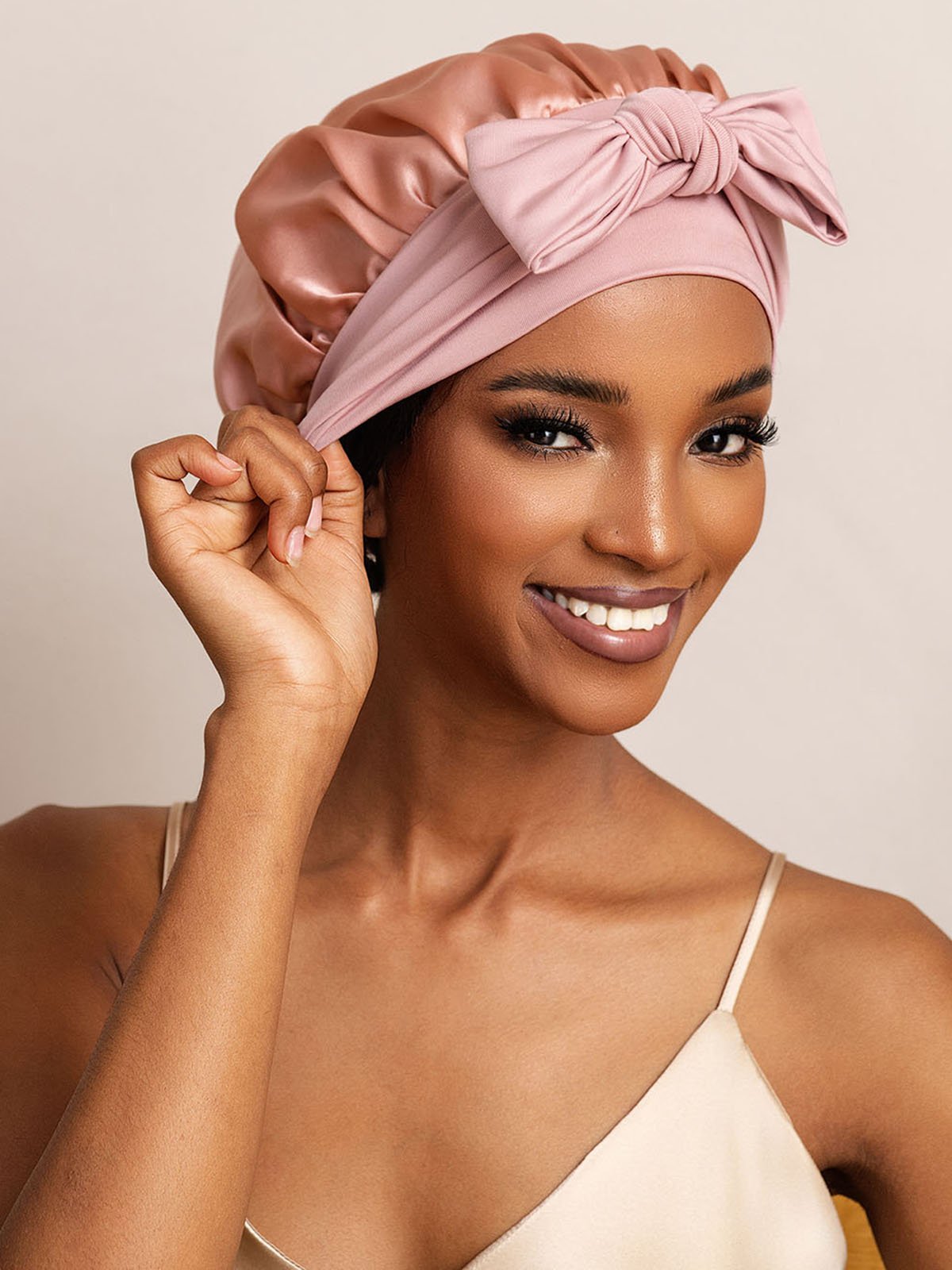


A silk hair bonnet for sleeping puts a layer of fabric between your hair and your bedding. Hair tucked inside rubs against the bonnet instead of the pillowcase as you shift and turn at night. That change in contact is the main thing a bonnet does, and it only applies to hair that stays covered.
Think of it as a friction-management accessory, not a treatment. Lab testing shows silk is gentle against hair, but wearing a bonnet does not guarantee smoother, stronger, or less frizzy hair by morning.
What a Silk Bonnet Can Do While You Sleep
Sleeping in a silk bonnet changes what your hair touches. Without one, your hair presses against cotton, linen, or whatever fabric covers your pillow. With one, the bedding touches the outside of the bonnet, and the covered hair touches only the silk lining.

Friction is the rubbing force between two surfaces as they slide past each other. Every time you roll over, hair and fabric slide against each other. A bonnet swaps the surface your covered hair slides against, which is the reason many people use one.
Silk as a material has some lab support. In hair and fabric testing, TRI found that luxury silk stood out as the material most gentle on hair. That is a material-level result. It compares fabrics against hair in a test setting. It was not a trial of people wearing bonnets overnight, so it gives a rationale for choosing silk rather than a promise about how your hair will look.
Real-world overnight use has a smaller, more practical data point. In a panel test of six silk-or-satin bonnets, Consumer Reports found that some stayed on all night and helped maintain testers' hairstyles. Two details matter here. The tested group mixed silk and satin, so the result is not specific to silk. And "staying on all night" was one of the things being judged, which tells you that a bonnet staying in place is not a given. If you are weighing the two materials, our guide to silk vs. satin for sleep covers what actually differs.
So the honest answer is this: a silk bonnet can change the surface your covered hair contacts all night, and silk is a material with favorable lab results. Anything beyond that, such as fewer broken strands or less frizz, is a hope rather than an established overnight effect.
Why Coverage and Fit Change the Overnight Role
A bonnet only changes contact for the hair inside it. Any strand that slips out is back on the pillowcase, rubbing against bedding just as it would without a bonnet.
Here is a simple way to picture it. Say you go to bed with all your hair tucked in. If the bonnet stays put, every covered strand spends the night against silk. Now say the bonnet slides back around 3 a.m. and the hair at your nape and crown comes loose. For the rest of the night, that exposed hair is on the pillow, and the bonnet does nothing for it. The silk inside is the same in both cases. What changed is how much hair it was actually covering.
That is why fit matters. A bonnet that is roomy enough to hold all your hair, and secure enough to stay on while you move, keeps the contact change working through the night. A bonnet that is too small for your hair's volume may leave sections out from the start. One that is too loose may slide off. A quick morning check tells you a lot: if you often wake up with the bonnet shifted or hair outside it, the bonnet is not covering what you need it to cover, and a different size or shape is the next thing to try.

Hair length, texture, and style all change how much space you need. Bulky or long styles take more room. Our thick-hair bonnet fit guide looks at space and tension for fuller hair. If your hair is fine or straight and tends to slip out, see our tips on bonnets for fine, straight hair.
Tighter is not automatically better. A 2021 dermatology article included the author's personal observation on tight nighttime wraps: tight-fitting head wraps at night may contribute to traction alopecia, a type of hair loss from ongoing pulling, in people who have other risk factors. That was one clinician's observation, not a measured risk for bonnet wearers. Still, it is a reason to choose a secure fit that does not pull. Whether you pick a bonnet from our silk accessories collection or elsewhere, aim for a band that holds without leaving you feeling squeezed.
What a Silk Bonnet Cannot Promise
A silk bonnet changes surface contact, but it is not a proven method to stop breakage, reduce frizz, or repair damaged strands.
The clinical picture is limited. The same 2021 dermatology article noted that evidence-based data were lacking on nighttime silk coverings, even though silk scarves, bonnets, and pillows had been advocated to help maintain hair and avoid breakage. That statement reflects the evidence as the authors saw it in 2021. It does not mean no research has appeared since, but it does mean you should be wary of anyone presenting bonnet benefits as settled science.
The two supportive findings also have clear edges. TRI's result is about how silk fabric compares with other fabrics against hair in testing. It does not measure what happens to a person's hair after weeks of sleeping in a bonnet. Consumer Reports' panel saw some bonnets help maintain hairstyles, but the test covered both silk and satin bonnets, and its summary does not report a silk-specific drop in breakage or frizz.
To judge whether a silk hair bonnet for sleeping works for you, focus on practical fit and morning comfort: check whether all your hair stayed covered without the band pulling, and see whether your style held in place overnight.
FAQs
Is a silk bonnet the same as sleeping on a silk pillowcase?
No. They cover different things. A pillowcase changes only the surface under your head, so hair that touches the pillow meets silk while the rest moves freely. A bonnet wraps the hair itself, so covered hair meets silk wherever your head goes. Which option works better comes down to personal sleeping habits and style coverage rather than a universal winner.
What happens if my bonnet slips off in the middle of the night?
Any hair that comes out is back in direct contact with your bedding for the rest of the night. If the whole bonnet comes off, you are effectively sleeping without one from that point on. Waking up with it shifted on a regular basis is a sign to try a different size, shape, or closure.
Can a silk bonnet repair hair that is already damaged?
No. A bonnet changes what covered hair rubs against while you sleep, but shifting fabric friction cannot mend split ends or reverse existing hair damage.
Does a silk bonnet work the same for every hair type and style?
Not necessarily. The basic role is the same for any hair that stays covered, but how easily a bonnet holds your hair depends on its length, volume, and style. Long or full styles need more room, while fine or straight hair may slip out more easily, so the best fit varies from person to person.