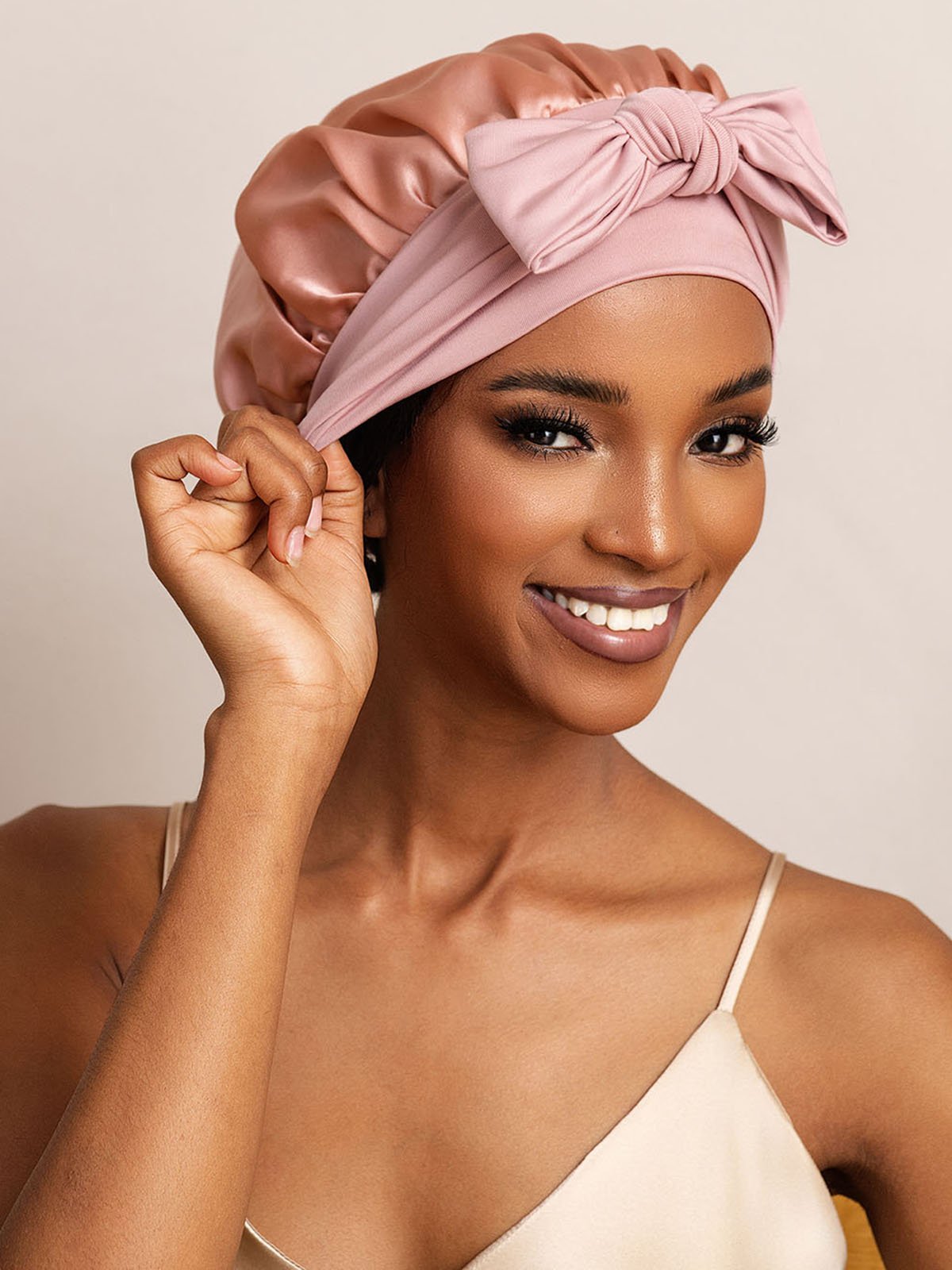


Pick a hair tie if you want your hair held away from your face at night. A silk pillowcase does a different job: it changes the surface your loose hair rests on, but it does not hold hair back.
Use both only when you want hair gathered and a smoother surface for whatever hair still touches the pillow. These tools fix different parts of the problem, so choose by the result you care about most.
Which Option Keeps Hair Off Your Face?
Only a hair tie moves hair away from your face, because it gathers hair into one place. A pillowcase sits under your head, so it can change what your hair touches but not where your hair goes. Match the tool to your goal:
- You want hair off your face: Choose a hair tie, as long as you can gather the section that bothers you and the hold feels comfortable. This is the direct fix for strands that fall across your eyes or mouth.
- You want to sleep with your hair down: Choose a silk pillowcase. Your hair stays loose and can still drift toward your face, but it rests on a smoother surface than coarser fabrics.
- You want both jobs done: Use a tie for placement and a silk pillowcase for the hair that still contacts the pillow. The two work side by side rather than one replacing the other.

What a Hair Tie Changes at Night
A hair tie changes where your hair sits. It gathers the hair you can secure and keeps that section in one spot, such as a ponytail, bun, or braid. Hair that never makes it into the tie stays loose and can still fall forward, so a tie only helps with the sections it actually holds.
Start with a simple fit check before you settle on a bedtime style. First, ask whether you can gather the section that keeps landing on your face. Long, even lengths usually gather easily. Shorter front pieces or layers may slip out, which tells you a tie alone may not cover that part.
Second, pay attention to how the hold feels once you lie down. A style that feels fine while you stand can press or tug when your head turns on the pillow. The American Academy of Dermatology advises that you loosen a hairstyle so it doesn't pull, and to change your hairstyle right away if it causes pain. In practice, that means you shouldn't push through a tight tie just to keep hair in place. Loosen it, move it to a different spot on your head, or try another style.
The type of tie is also part of comfort. Some people prefer a soft fabric scrunchie over a thin elastic for sleeping, and our silk hair accessories include scrunchies if that is the kind of tie you want to compare. Whatever tie you use, the rule is the same: it should hold the section you need without pulling.
What a Silk Pillowcase Changes When Hair Is Loose
A silk pillowcase changes the surface under your head, not the position of your hair. When you sleep with your hair down, every loose strand rests on the pillowcase. Switching that fabric changes what your hair rubs against as you move during the night.

The Sleep Foundation explains that silk's smooth texture glides against hair, producing less friction than coarser fabrics that are more likely to snag hair. That is the real difference here: a smoother contact surface compared with rougher materials. It does not move hair out of your face, and it won't stop loose strands from drifting forward while you sleep.
Because it acts only as a contact surface, a silk pillowcase remains completely passive: it works equally on fully loose hair or any stray strands that escape an overnight tie.
If you decide a surface change is what you want, you can browse silk pillowcases in our 22 momme range. For a broader look at the reasons people switch, our guide to the benefits of sleeping on silk covers the topic in more depth.
FAQs
What if short front pieces won't stay in a hair tie?
A tie can only hold the hair it reaches, so short layers, bangs, or face-framing pieces may still fall forward. You can still tie back the longer sections to reduce how much hair ends up near your face. For the pieces that slip out, accept that they will stay loose, and decide whether you also want to change the surface they rest on. A pillowcase won't hold those pieces back, but it is the only part of this setup that affects them once they are loose.
Is there a recommended bedtime style for curly or tightly coiled hair?
Yes. For people with curly or tightly coiled hair who are able to do so, the AAD describes a loose ponytail or braid before sleep as an option. Its example is a loose ponytail on top of the head, sometimes called a pineapple, or a loose braid, to help preserve curls and reduce friction against the pillowcase. The key word is loose. If you want to build a full night and refresh routine around that style, our silk accessory plan for curly hair walks through it step by step.
Does using both a tie and a silk pillowcase do anything extra?
Using both simply covers two separate jobs at once. The tie handles placement for the hair you gather, and the silk pillowcase changes the surface for the hair that still touches the pillow, such as the ends of a ponytail or any loose layers. Neither one becomes stronger because you added the other. Using both makes the most sense when part of your hair is tied back and part stays loose against the pillow every night.
Can I skip the tie if I already sleep on silk?
You can, as long as hair on your face doesn't bother you. A silk pillowcase leaves your hair loose, so strands can still fall forward while you sleep. If waking up with hair across your face is the problem you want solved, a tie is still the tool that addresses it. If you're mainly after a different surface for loose hair, the pillowcase alone fits that goal.