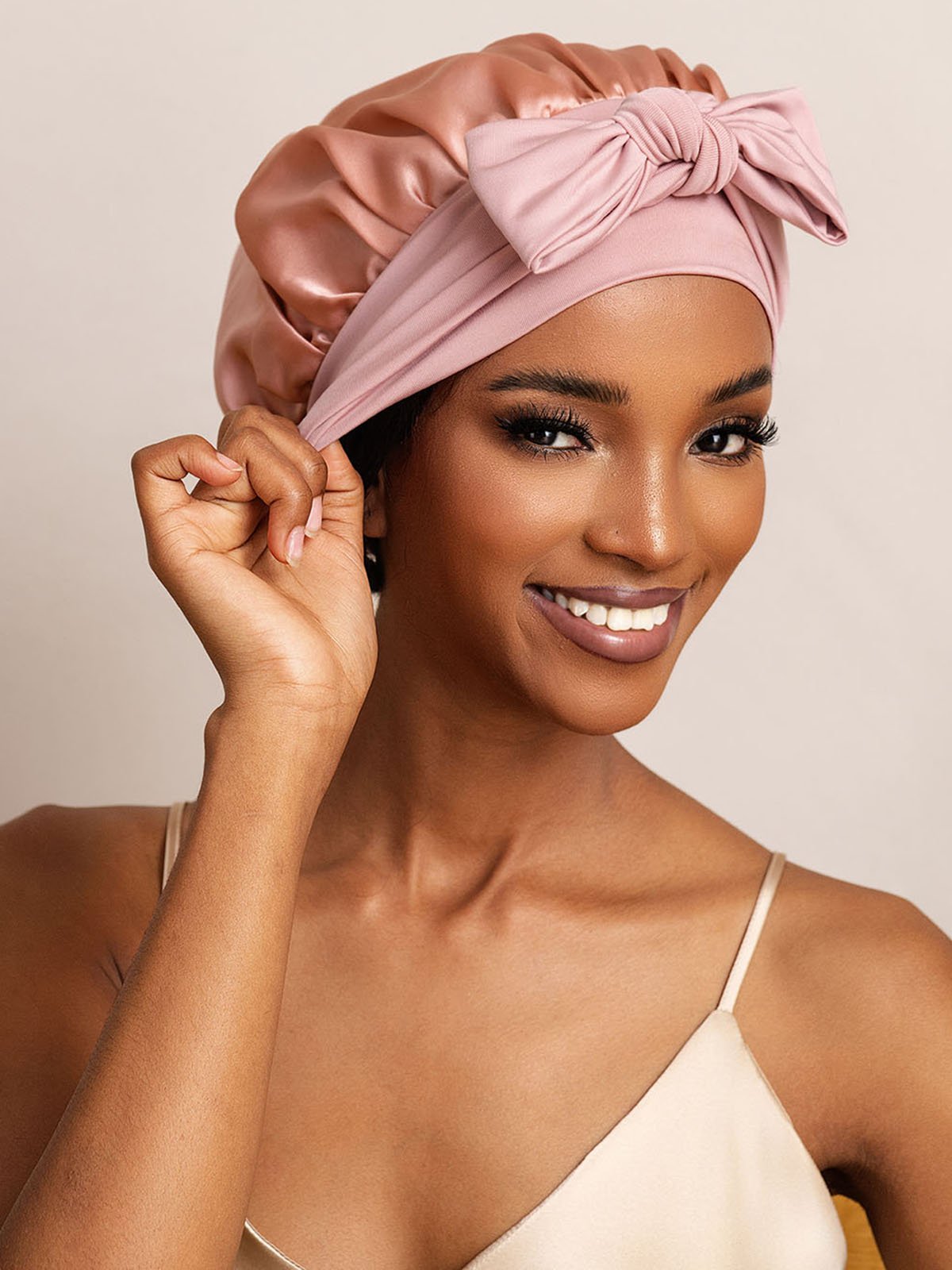


With silk hair ties, the comfortable spot is the base of your ponytail, at whatever height gives you the style you want. Make it snug enough to hold but not tight enough to tug. No one height feels best for everyone, so when you place a silk scrunchie, let the look and your plans for the day pick the starting point.
After that, comfort comes down to two things: pulling at the scalp and pressure where your head rests. Sleep is its own case, because the nighttime advice for curly hair is about protecting curls, not about which spot feels best.
Choose the height that matches the style—not a universal comfort rule
For an everyday ponytail, start with the look you want. Gather your hair at that height: near the crown for a high pony, at the back of the head for a mid pony, or near the nape for a low one. Smooth the hair toward that point with your hands or a brush. Then wrap your silk hair tie around the base of the ponytail, right where the gathered hair leaves your head.
Stop wrapping once the ponytail holds its shape. The scrunchie should sit snugly at the base without dragging the hair at your hairline, temples, or nape. If a heavy ponytail needs one more twist to stay up, add it. Then check that the hair around your face lies smooth instead of pulled taut.
Treat the height as a style choice. No solid evidence shows that a high, mid, or low ponytail is more comfortable in general. So pick the height that suits your hair, your outfit, and your day, then judge comfort by how it actually feels. For example, a high pony that feels fine at your desk might feel different under a hat or against a car headrest. The same goes for a low one.
Tension is the one firm rule. The American Academy of Dermatology advises loosening hairstyles that pull and says a hairstyle that hurts is too tight. Whatever height you choose, the scrunchie should hold the style without straining it. Want to try something new? Our guide to more scrunchie styles walks through a classic ponytail, a half-up style, a braided updo, and a messy bun.
For sleep, separate curl-care advice from comfort
Sleep changes things, because now your head rests on the ponytail instead of just carrying it. For curly hair, AAD's curly-hair sleep advice suggests wearing a loose ponytail on top of your head or a loose braid before bed, if you can. The goals it gives are preserving your curls and reducing friction against the pillowcase.
That tip is about curl care. It doesn't say a top ponytail is the most comfortable way to sleep, and it isn't written for every hair type. If you follow it, keep the key detail: the style stays loose. Wrap the silk hair tie only enough to gather the curls on top, and don't cinch it.
For comfort while lying down, check where the ponytail and scrunchie end up in your usual sleep position. Lie down and notice whether the tie or the bunch of gathered hair sits under your head, behind your ear, or against your neck. If it does, move the ponytail away from that spot, higher or lower on your head, and lie down again to compare. This is a personal fit check, so the right spot for a back sleeper may not be the right one for a side sleeper.
Some curly-haired sleepers would rather cover their hair than gather it. If that's you, our comparison of silk and satin bonnets and our guide to silk bonnets for curly-haired men cover that route. Our silk sleep essentials put bonnets, pillowcases, and scrunchies in one place.
If it pulls or presses, loosen or move the placement
Fix the problem you actually feel: loosen the style if it pulls, and move it if it presses. The AAD says pain means a style is too tight and advises loosening hairstyles that pull, so tightening the scrunchie won't fix the discomfort.
- Find the source. Pulling feels like tugging at the scalp, for example at the hairline, temples, or base of the ponytail. Pressure feels like a lump where the scrunchie or gathered hair meets a pillow, headrest, or seat back.
- If it pulls, loosen it. Take out one wrap of the silk hair tie, or let the hair near your face relax a little before you re-secure it. You can keep the same height if you like the look.
- If it presses, move it. Slide the ponytail higher, lower, or slightly off-center so the tie and hair sit away from the contact point.
- Check again in the same activity. Go back to what you were doing, whether that's sitting at a desk, driving, or lying down. If it still pulls or presses after you loosen and move it, take the ponytail down and switch to a looser style.

FAQs
Can I keep my daytime ponytail in when I go to bed?
Yes, but check it once you lie down. A height that felt fine while you were upright can put the scrunchie right under your head. If you feel a lump, shift the ponytail or let your hair down, and keep any nighttime style loose.
Does the top-of-the-head sleep ponytail work for straight or wavy hair too?
The AAD tip about a loose top ponytail or loose braid at night comes from its curly-hair care advice. Its stated purpose is preserving curls and reducing pillowcase friction. For other hair types, choose your nighttime spot by how it feels when you lie down, and don't treat the top position as a rule.
What if my ponytail slips unless I wrap the scrunchie tighter?
An extra wrap can add hold, but stop once your hairline or scalp starts to feel tight or sore, because a style that hurts is too tight. Try gathering and smoothing the hair more evenly before you wrap it. If it still won't stay without strain, pick a looser style, like a braid, for that activity.
Where should a scrunchie go for a bun or half-up style?
The same idea works here. Secure the scrunchie at the base of the section you gather, at the height that creates the look. Then use the same pull-or-press check: loosen it if it tugs, and move it if it presses where your head rests.