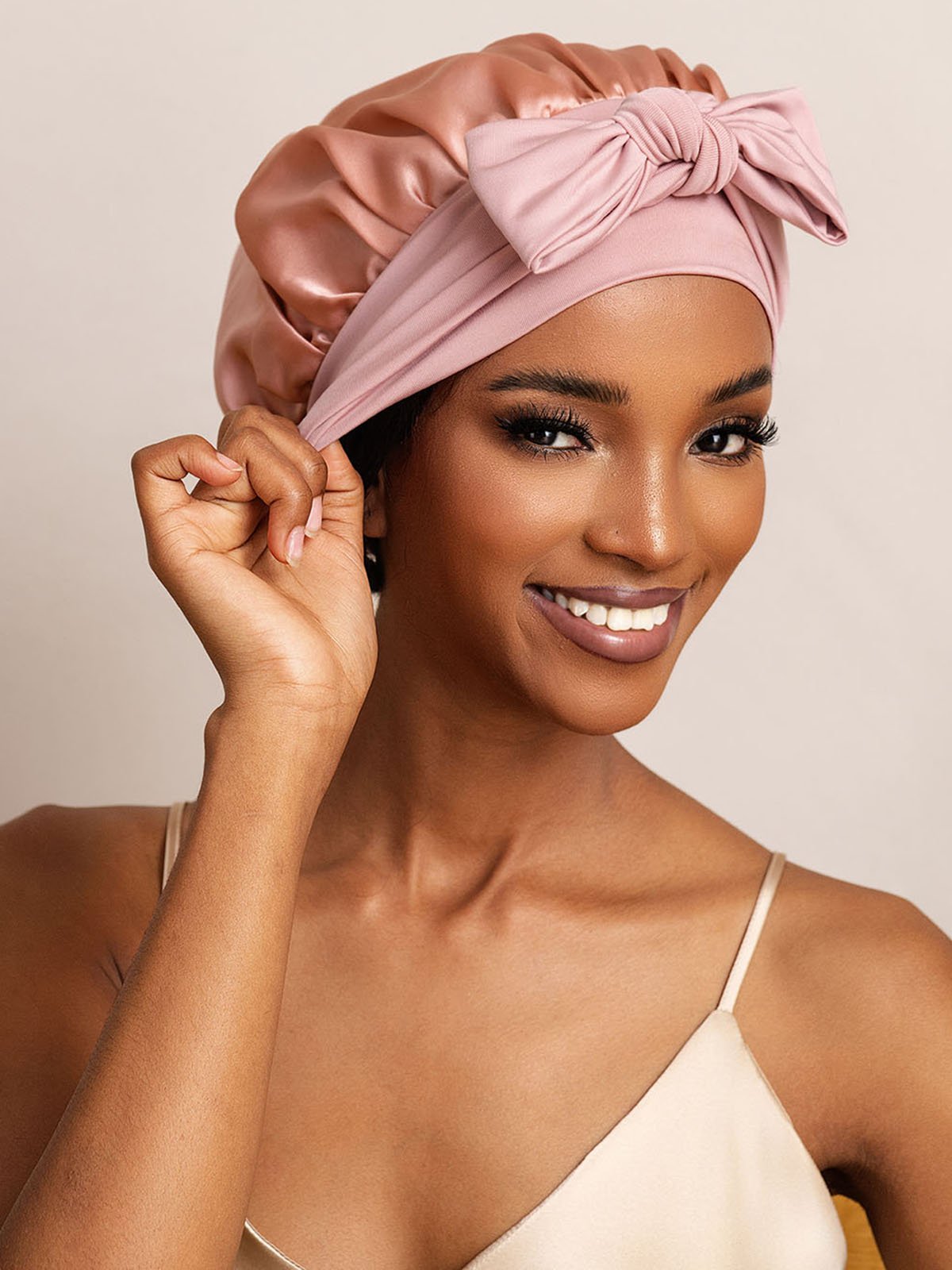


Use a scrunchie when your main goal is to gather your hair into a loose bun. Use a silk scarf when you want a visible finish or some coverage on top. If you want both, let the scrunchie hold the hair and add the scarf as a separate outer layer.
Neither accessory wins every time. A scarf's coverage and staying power depend on its size and how you tie it, while a scrunchie does one simple job. That's why many people keep silk hair ties and a scarf side by side. Each one handles a different part of the look.
Choose by the Job: Hold, Coverage, or Both
Start by naming what the bun needs most. Then match the accessory to that job instead of asking one piece to do everything.
| Your priority | Reach for | What to expect |
|---|---|---|
| Gathering the hair | Scrunchie | Holds the bun; adds little cover |
| Visible finish or coverage | Silk scarf | Coverage depends on scarf size and wrap |
| Both | Scrunchie plus scarf | Scrunchie anchors, scarf decorates |

When hold comes first, gather the hair with a silk scrunchie and skip the scarf entirely. A decorative wrap is not a dependable anchor on its own, so don't count on it to keep a loose bun together through a busy day.
When appearance comes first, the scarf's shape decides the result. A long, narrow scarf like our long silk scarf wraps and drapes differently than a larger square from our 110cm silk scarves collection. Before you tie anything, hold the scarf against your bun. If the fabric only reaches around the base, plan on an accent, not a cover. If it can pass over the top and still leave enough to knot, full coverage is possible.
What a Scarf Adds to a Loose Bun
A scarf mostly adds a visible, decorative layer rather than holding the bun up or hiding it. In one Allure style example, a long silk scarf is tied around a bun's base with the ends pulled down the back. That look shows how a scarf turns a messy bun into a finished style without acting as an anchor.
Keep the difference between an accent and a cover clear when you pick a scarf. An accent sits at the base of the bun, like a ribbon, and the hair stays visible on top. A cover has to travel over the bun itself, which takes more fabric and a different wrap. If you love the draped look with trailing ends, a long scarf tied at the base will get you there. If you want the bun hidden, choose a scarf big enough to fold over it, and test the fit before you leave the house.

Daytime wear adds one more practical point. Draped ends move when you turn your head or pull on a jacket, so a style that relies on loose ends works best when you're fine with a relaxed, slightly undone finish.
Can a Scarf Secure the Bun by Itself?
Sometimes, but only when the scarf is part of how the bun is built. Wrapping a scarf around a bun you've already made is a different thing from tying the scarf into the style.
One general wrap-and-tuck scarf-bun method works this way. After the loose bun is formed, one end of the scarf's knot is twisted, wound around the bun, and tucked underneath so it won't come loose. The same guide suggests securing the end with bobby pins if you're worried the scarf bun will slip. That tutorial covers scarves in general, not silk in particular, so treat it as one technique to try rather than a promise that every silk scarf will grip.
Here's how to decide. If your bun already sits in place and the scarf is just going around it, expect decoration, not hold. If you want the scarf to do the holding, use a tie-in method like the one above and keep a few bobby pins handy. Try the style at home first. Turn your head, lean forward, and see whether the tucked end stays put. If it shifts, pin it or switch to a scrunchie underneath.
Want more options for tying a scarf in your hair? Our silk scarf-tying guide walks through several knots and the prep that helps them stay neat.
When to Use Both
Pair them when the bun needs a secure base and a finished look. Keep the order simple so each piece does its own job:
- Gather the hair first. Twist your hair into a loose bun and wrap a scrunchie around it until the bun feels settled.
- Add the scarf second. Tie the scarf around the bun as a separate outer layer, either at the base for an accent or over the top for coverage.
The scarf in this pairing is there for looks. It won't make the scrunchie hold any better, so if the bun feels loose, fix the scrunchie before you retie the scarf. Your scarf's length and width still decide how much of the bun and scrunchie end up covered. Pairing silk hair ties with a scarf also gives you a quick switch: take the scarf off for a plainer look and the bun stays as it was.
FAQs
What should I do if my scarf bun starts slipping during the day?
Pin the loose end. The wikiHow scarf-bun guide recommends bobby pins for a scarf bun that might come loose. If it keeps slipping after that, redo the bun with a scrunchie as the base and wear the scarf as a decorative layer on top.
Is a silk scarf proven to hold a bun better than other scarves?
No. The examples here show what scarves can do for style, not that silk grips better. Allure's silk scarf look is about a decorative finish, and the scarf-bun tutorial isn't specific to silk. Judge any scarf by whether your chosen tie stays put when you move.
Does my scarf need to match my scrunchie?
Only when both will show. If the scarf covers the whole bun, the scrunchie is hidden and its color doesn't matter. If the scarf sits at the base as an accent, the scrunchie stays visible, so pick colors or prints that look good together.
How should I clean silk hair ties and scarves after wearing them?
Read the care label first, since it decides the safest method for each piece. Our guide on washing silk hair accessories covers gentle detergent and careful drying for scrunchies and hair scarves.