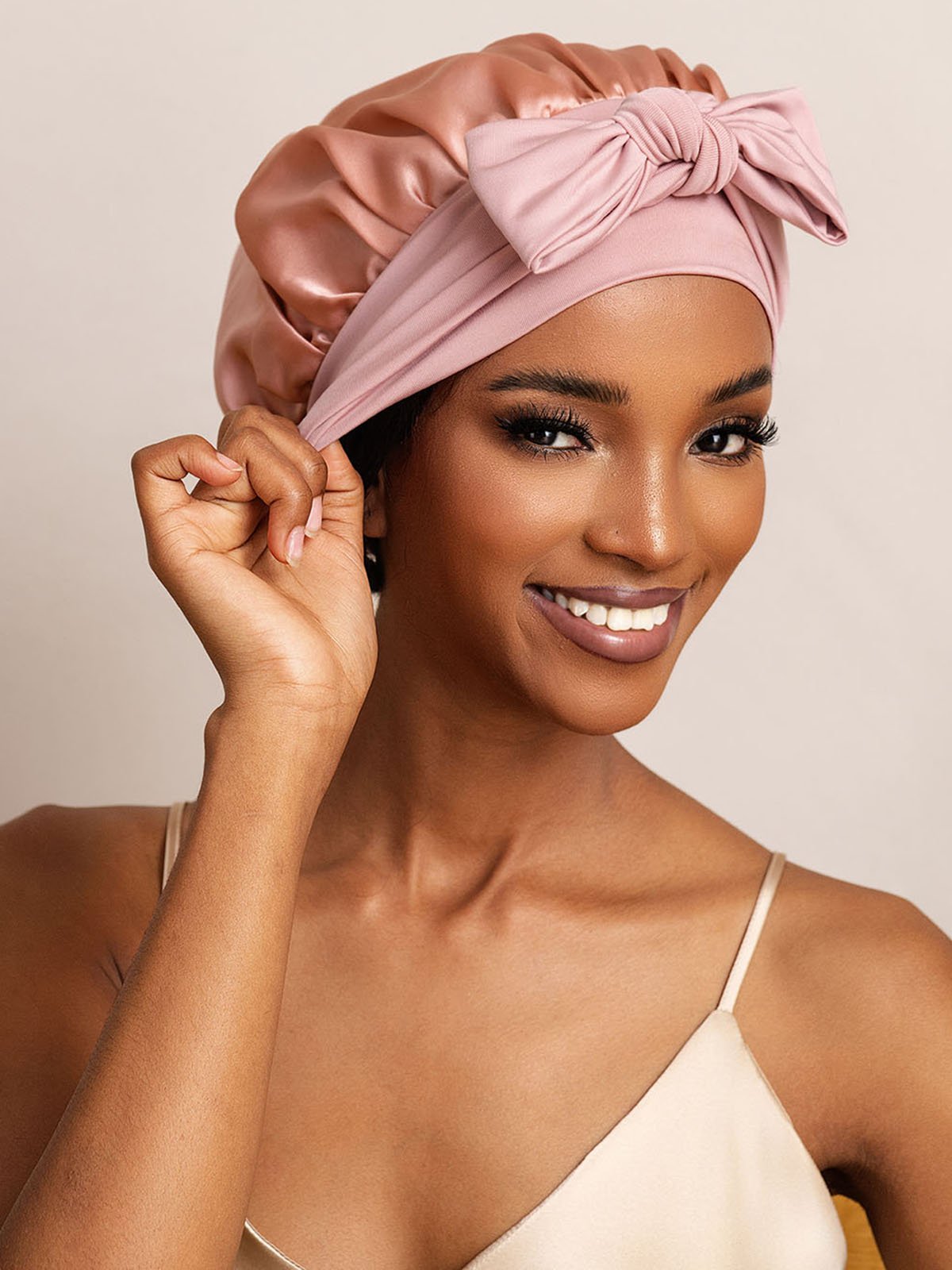


Silk is a fiber, satin is a weave, and silk-lined means silk is used in the lining, not necessarily in the whole piece. Each word answers a different question: what the fabric is made of, how the fabric is built, and where a material sits. To read the label on a silk cap, bonnet, wrap, or scrunchie, start with the surface that touches your hair. Then work out what the shell, elastic, and trim are made from.
What silk, silk-lined, and satin mean on a label
Silk and satin are not two competing fiber names. The FTC's textile fiber rule lists silk as a generic fiber name used in fiber-content disclosures, while Oregon State University Extension lists satin as one of three basic weaves, which is a way of building fabric. Silk-lined is a third kind of term: it points to one component.

| Wording | Illustrative label | What it tells you | What it leaves open |
|---|---|---|---|
| Silk | "Silk cap, 100% silk" | Fiber content | Which parts the statement covers, if the item has layers |
| Silk-lined | "Silk-lined bonnet" | Silk is in the lining | Shell, band, and trim materials |
| Satin | "Satin scrunchie" | Weave or construction | The fiber itself |
The satin row is where shoppers most easily fill in a blank that the label never filled. A satin weave can be made from different fibers, so you need a separate fiber line to know what the fabric actually is. Without one, the fiber stays unspecified.
Product names work the same way. A listing titled "silk cap" still needs component wording, such as a fiber line or a note about the lining, to show whether silk applies to the whole cap or one part of it. If you're weighing the two bonnet fabrics for overnight wear, our bonnet material comparison covers how the fiber choice plays out in use.
Find the surface that touches your hair
Look at the inside of the accessory first, then match each material word on the label to a specific part. Any part the wording doesn't name stays unknown, even if another part is clearly described.
- Turn the item inside out or look closely at the inside. On a cap or bonnet, the inner layer touches your hair. On a wrap, it may be whichever side you tie against your head. On a scrunchie, it is the fabric around the elastic.
- Name every other visible part. Note the outer shell, any elastic or adjustable band, and trim such as bows or piping. Bands and closures are separate components, and they also shape how a piece sits on your head, which our guide to bonnets and wraps for men discusses from a fit angle.
- Match the wording to a part. "Lining," "trim," and "elastic" each describe that part only. A line like "lining: silk" answers the hair-contact question for a lined bonnet if the lining is the side facing your hair.
- Mark the gaps. If the label or description gives a fiber but doesn't say which component it covers, write that part down as unknown instead of assuming.

Here's how it plays out. A lined bonnet labeled only "silk-lined" tells you about the inside layer but nothing about the shell. A scrunchie described as "satin" with no fiber line leaves both the fabric fiber and the elastic unidentified.
An FTC example offers a useful parallel. The FTC's silk-trim example describes a cotton T-shirt advertised as a "Silk Trim T," and says the label must disclose the trim content. It is about a garment, not a hair accessory, but the logic carries over: a material tied to one part describes that part.
Shopping online makes the inside harder to see. Look for interior photos and the full description, not just the title. On our site, our page on finding product photos and details shows where those live on each listing, and you can practice the four steps on a silk bonnet product page. You should end up with one of three results for each part: identified material, named component with a stated fiber, or unresolved.
What a label can—and can't—confirm
A label confirms only what it states about the parts it names. Everything else stays open until the seller or a fuller description fills it in.
- Stated fiber content. For products covered by the Textile Act and Rules, FTC guidance for covered textile products says generic fiber names and percentages by weight are listed in descending order of predominance. Coverage and exceptions vary by product, so don't expect every hair accessory to carry an identical label.
- A named component. "Silk-lined" or "silk trim" confirms silk in that part. It does not tell you the shell or the whole accessory is silk, the same point the trim-garment example makes.
- A construction word alone. "Satin" confirms a weave. You still need fiber wording to know the material.
- Unknown parts. Any component without its own material wording is unknown. Your next step is a direct question to the seller, such as "What fiber is the shell?" or "Which side is the silk lining on?"
- Performance. A material name on a label is not a promise about friction, frizz, comfort, or how your hair will look in the morning. What silk is meant to do overnight is a separate question, which our silk sleep cap guide covers.
Once each part is either identified or flagged, you can compare two accessories on equal terms instead of comparing a fiber word against a weave word.
FAQs
If a label says "satin" and lists no fiber, what is it made of?
You can't tell from that wording. Satin describes how the fabric is woven, so the fiber is unstated. Look for a separate fiber-content line on the sewn-in label or in the listing, or ask the seller what fiber the satin is made from.
Can a fabric be both silk and satin?
Yes. Because one word names the fiber and the other names the weave, they can describe the same fabric together. A description such as "silk satin" gives you both pieces of information, which is more complete than either word alone.
My bonnet says "silk lining." What about the outer shell?
The shell is unknown unless the label or description names it. "Silk lining" covers the lining only. Check for a second material line, often listed as shell or outer, before assuming the outside matches the inside.
The tag says "100% silk," but my silk cap has two layers. Does that cover both?
Not necessarily. A single fiber line on a layered silk cap doesn't say which layer it describes or whether it covers the band. If the tag doesn't break the fiber down by part, confirm with the seller which surface faces your hair.