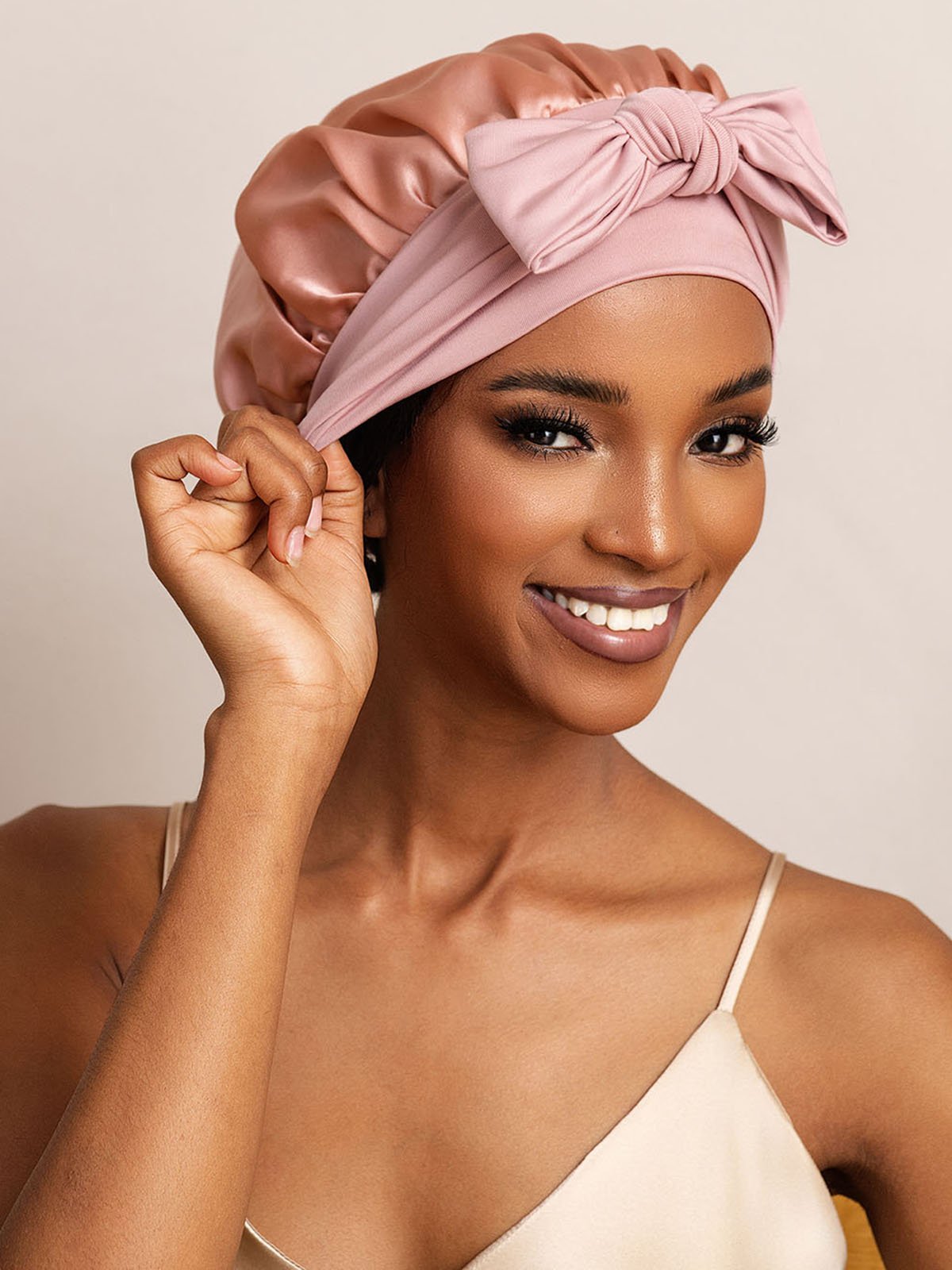


No. Current evidence does not show that a silk hair accessory prevents breakage.
Silk does slide more easily against hair than cotton in pillowcase testing, but that is a finding about fabric rather than proof that ties, scrunchies, wraps, or bonnets stop breakage.
So treat silk as a smoother surface, not a fix. How tight a tie sits, how long you wear a style, and how you take an accessory out are separate questions. The fabric alone does not answer them.
Does a Silk Hair Accessory Prevent Breakage?
The evidence doesn't show that it does. What researchers have measured is friction between hair and pillowcase fabric, not breakage caused by hair accessories.
In work on pillowcase materials, researchers at TRI reported lower friction in pillowcase testing between hair and silk than between hair and cotton. Friction here means how "slippery" a surface is against a single hair fiber. A lower friction number means hair slides across the fabric more easily instead of catching on it.
That result is useful, but it is narrow. It describes hair moving across a flat piece of fabric, like your head shifting on a pillow through the night. TRI also describes a separate rotating-head setup built to study fiber breakage after contact with materials such as cotton or silk. That setup matters for one reason. It shows that friction and breakage are measured as two different things. A low-friction result on its own is not a breakage result.
Hair accessories also touch hair in a different way than a pillowcase does. It helps to separate two forces:
- Rough contact is hair rubbing or catching on a surface. This is what a friction test measures.
- Mechanical tension is how hard an accessory pulls, squeezes, or holds hair in place. A tie or scrunchie works by gripping, so tension is part of its job.

A smoother fabric speaks to the first force only. A silk hair tie wrapped three times around a ponytail still grips that ponytail. A wrap or bonnet does not grip hair the same way, but it also hasn't been tested for breakage. The pillowcase finding can't be stretched to cover either one.
This gap cuts both ways. The evidence doesn't show that silk hair accessories reduce breakage. It also doesn't show that they make no difference. The honest answer is that the accessory-level outcome hasn't been demonstrated.
If the smoother surface you want is the one TRI actually compared, that surface is a pillowcase, the type of item in our silk pillowcase sets. For accessories, set your expectations around comfort and feel rather than a breakage promise.
How Should Fit and Handling Change Your Expectations?
Treat fit and handling as questions about your own routine, not as proven breakage fixes. No accessory-level study we can point to ranks fit, tension, hairstyle, placement, or handling by how much each one affects breakage.
That means available evidence cannot compare which factor matters most. It also means no single adjustment has been shown to prevent breakage. What you can do is pay attention to what you notice while wearing an accessory.
Some things are easy to observe:
- A tie or scrunchie that feels like it pulls at your scalp.
- A hair that snags when you slide an accessory off.
- A bonnet or cap that feels tight at the band, or one that slips off during the night.
These are real experiences, and they are worth acting on for comfort. Noticing a pull or a snag, though, doesn't tell you that it causes breakage or how much. A feeling and a measured outcome are different kinds of information.
If you want to try a gentler routine, keep it simple and treat it as a personal trial. Whether you use a skinny silk scrunchie or a plain elastic, the same steps apply. Wrap it one fewer time so the hold feels snug instead of tight. Slide it off slowly rather than pulling it straight out. Change where you place a ponytail now and then instead of wearing it in the same spot every day.

Here is what to watch for. If the pulling feeling or the snagging stops, you've solved a comfort problem you could feel. Keep the change. Whether it also changes breakage is a separate question that this material research does not answer. These adjustments are comfort-led choices, not tested ways to prevent breakage.
Sleep covers raise a different choice. With a bonnet or cap, the practical questions are mostly fit and coverage: does it stay on, and does it hold all your hair? You can compare cap and bonnet fit by hair length, volume, braids or locs, and how much you move in your sleep. If a bonnet has loosened with wear and slides off, you can tighten a stretched bonnet rather than replacing it. Better fit solves a staying-on problem. It isn't evidence about breakage.
FAQs
Can a silk hair accessory guarantee my hair won't break?
No. Available evidence does not demonstrate that a silk hair accessory can guarantee hair won't break. The referenced silk research measures how easily hair slides over pillowcase fabric, not breakage from ties, scrunchies, wraps, or bonnets. Think of silk as a smoother material choice, and keep realistic expectations about what an accessory can do.
Can a tight silk hair tie still contribute to breakage?
The research doesn't tell us either way. Silk's lower friction is about surface contact, not about how hard a tie squeezes. A tight silk tie is still tight, and nothing in the friction findings shows that tension is harmless or puts a number on a tie's breakage effect. If a tie feels like it's pulling, loosening it is a sensible comfort change, even though it hasn't been tested as breakage prevention.
Is a silk wrap or bonnet better for breakage than a silk tie?
They do different jobs, but no difference in breakage has been shown. A tie or scrunchie holds hair in a style by gripping it. A wrap or bonnet covers and contains hair, often during sleep, without gripping it the same way. Choose based on the job you need done. For covering hair, guides on wrapping with a silk scarf and a curly hair bonnet routine walk through setup and fit.