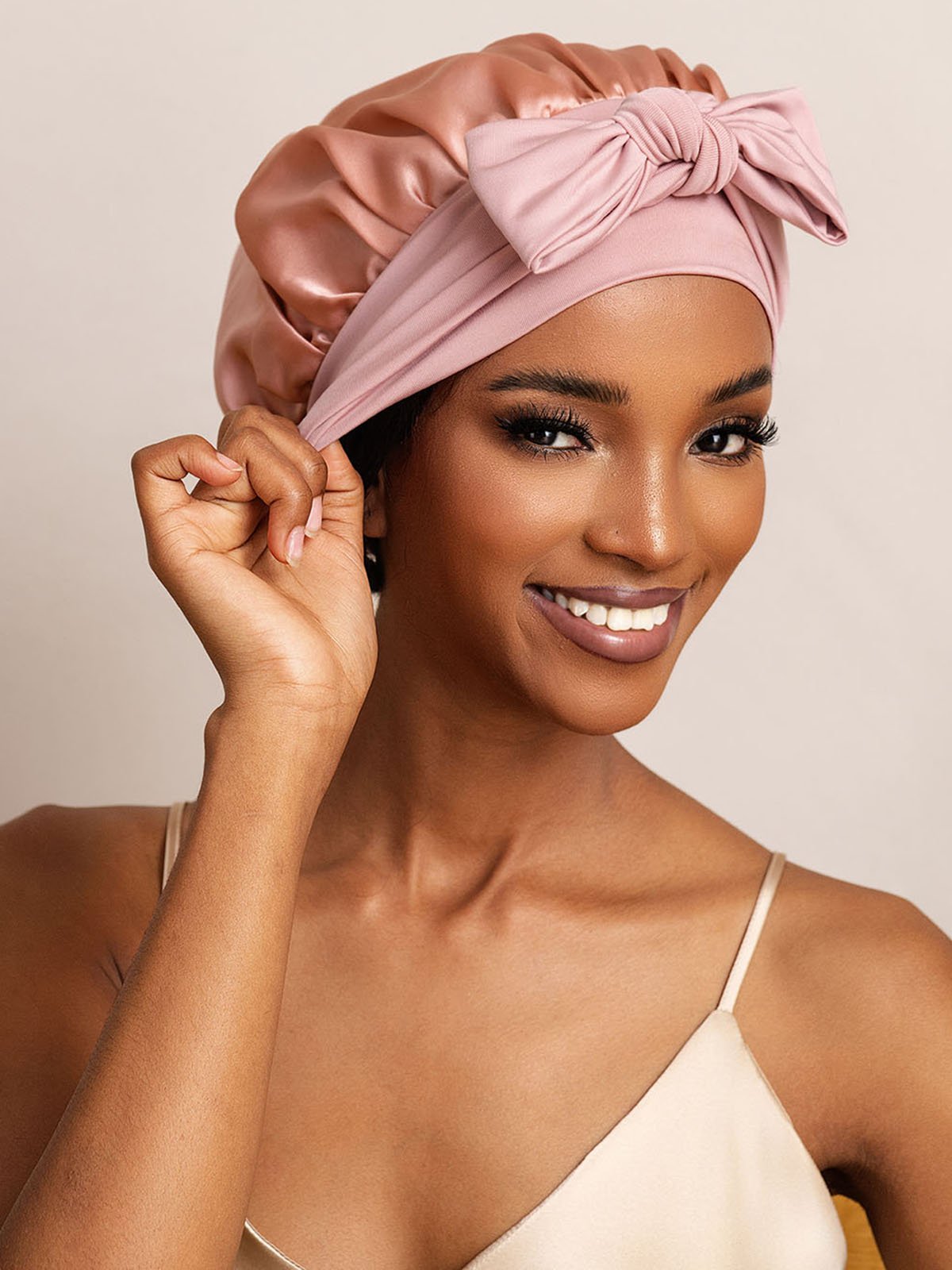


A silk hair bonnet for sleeping can feel fine to some hot sleepers, but the word "silk" alone can't promise a cooler or more comfortable night. The real trade-off is coverage. A bonnet covers the most hair, and it also means wearing fabric around your whole head.
If that much headwear sounds like too much, a partial scarf or a silk pillowcase gives you less coverage with less fabric on your head. None of these options has proof that it feels coolest, so choose by what you want covered and what you can comfortably wear.
Can a Silk Bonnet Feel Comfortable for Hot Sleepers?
Yes, it can feel comfortable for some people who sleep hot. It just isn't a sure thing. No evidence-backed rule says a silk bonnet will feel good to every hot sleeper or keep your head cool overnight.
That's why it helps to split the question in two. The first part is about the fabric, and you can't settle it from a product label. The second part is about you: do you like having something on your head while you sleep? That one you can answer from your own habits. Think about whether you ever sleep in a hat or hood, or whether you push even a light blanket off your face.
Next, ask how much coverage matters to you. If you want as much hair as possible tucked away each night, a silk hair bonnet for sleeping is the option built for that. If coverage is a nice extra rather than the goal, you have room to wear less.
We'd rather you choose by those two answers than by a cooling promise. A bonnet that matches your coverage goal and your tolerance for headwear has a better shot at staying on all night than one picked because it sounded cool.
What Can—and Can't—Be Said About Bonnet Comfort Factors?
Fabric, layers, and fit can't tell you ahead of time how warm a bonnet will feel on your head. What you can judge before bedtime is how much hair it covers and how much fabric you'll wear.
- The word "silk": It names a fiber, not a temperature rating. It doesn't show on its own that a bonnet will feel cool or manage heat for you.
- Lab fabric data: One study of tested silk/lyocell fabric measurements found that air permeability (how easily air passes through) rose as lyocell content went up. The tested 100% silk samples also had higher thermal resistance (how well a fabric holds back heat flow) than the tested 100% lyocell samples. These results describe fabric samples in testing. They don't predict how a finished bonnet feels on a sleeping person.
- Thickness, weight, and layers: Bonnets can differ in silk weight and in how many layers they use. How those choices change warmth for a hot sleeper isn't established, so don't assume thinner or single-layer means cooler. When you compare items, use our guide to checking silk weight details so you know what each one is made of.
- Fit: Fit decides whether a bonnet stays in place. Its effect on warmth isn't established. For sizing and closure help, our bonnet fit tips focus on keeping one secure overnight.
- Coverage: This is the factor you can actually see. A full bonnet encloses most or all of your hair and puts fabric all the way around your head. The next section compares the options on exactly that.
Bonnet, Partial Scarf, or Pillowcase: Choose by Coverage
Pick the option that matches how much hair you want covered and how much fabric you're willing to wear. Wearing less on your head doesn't prove you'll sleep cooler. It just means less headwear.
| Option | Hair coverage | Fabric worn around the head |
|---|---|---|
| Silk bonnet | Broadest | Yes, a full covering |
| Partial scarf | Some hair left out | Yes, less than a bonnet |
| Pillowcase | None | None |

Choose a bonnet when keeping your hair covered matters most and you're fine sleeping in headwear. It's the coverage-first pick, so it makes sense when protecting a style or keeping hair contained is the reason you're shopping at all.
Choose a partial scarf when you want some coverage but a full cap feels like too much. You trade some coverage for less fabric on your head.
Choose a pillowcase when any headwear bothers you. You sleep bare-headed, and your hair rests on the case instead of being wrapped. If that's your route, our silk pillowcase options are where to start.
Here's a practical way to test your choice. Say you start with a bonnet and keep waking up to pull it off. That tells you your tolerance for headwear is low right now. Your next step is to try a partial scarf, or drop headwear entirely and use a pillowcase, rather than forcing a covering you won't keep on. If you wear your hair straight, our guide to straight-hair overnight options matches each of these options to a blowout or sleek style.

FAQs
Can I use a silk pillowcase with a bonnet or scarf?
Yes, these options aren't either-or. Pairing them adds no extra fabric around your head. It just changes what your hair lands on if a bonnet or scarf shifts or comes off during the night. If you can't decide between full coverage and none, wearing a covering over a silk pillowcase lets you keep the coverage you want with a backup surface underneath.
Why does my bonnet keep slipping off at night?
When a bonnet ends up on the pillow without you taking it off, that points to fit. Check the size and the closure style, such as a band or ties, since those control how well it stays in place. If you're the one pulling it off half-asleep, the problem is different. That's a sign you'd do better with less headwear, not a different size.
Is a satin bonnet a different decision from a silk one?
Yes, it's a separate question. Silk and satin bonnets differ in material, which affects things like friction and moisture. Our silk vs. satin bonnet comparison covers those differences by hair type. Either way, you still face the same coverage-versus-headwear choice.
Can I switch between options from night to night?
Absolutely. Nothing locks you into one setup. You might wear a bonnet on nights when full coverage matters, like right after a fresh style, and sleep bare-headed on a silk pillowcase when any headwear feels like too much. Switching also shows you, over a few weeks, which setup you actually keep on until morning.