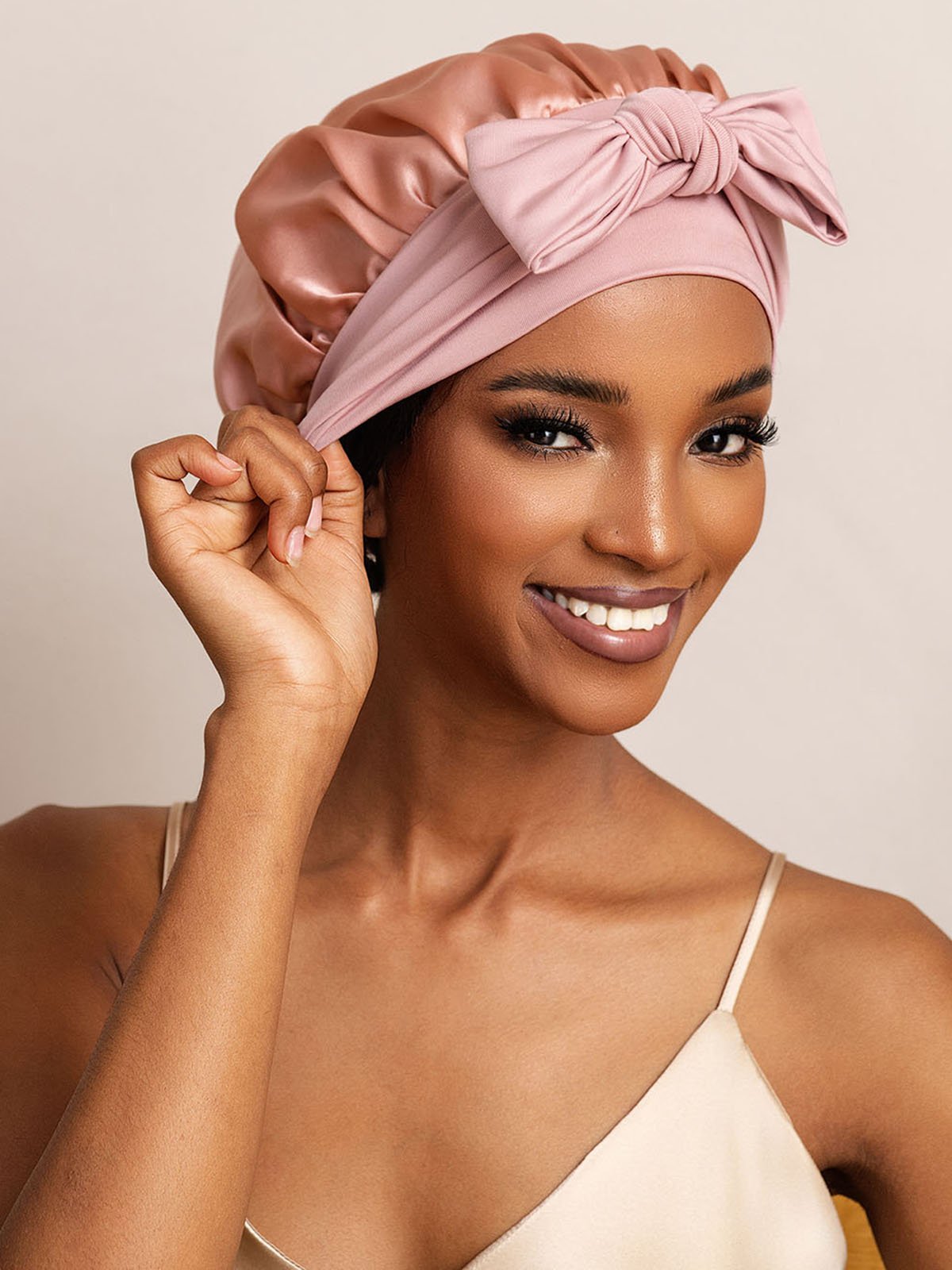


Yes, you can wear a silk bonnet over hair rollers, but only when the bonnet has enough room for your set as it sits. If the crown or opening has to squash, push, or shift the rollers to fit, that bonnet is the wrong cover for tonight's set. Shape matters more than fabric here, because a silk hair bonnet for sleeping still needs space to go over rollers.
Can You Wear a Silk Bonnet Over Hair Rollers?
Yes. A bonnet can work over rollers when the set fits inside without being pressed.
For example, one Consumer Reports tester describes a reported rollers-and-bonnet routine where she puts rollers on top, wraps her hair around her head with a satin tie, and adds a bonnet to keep everything secure. That's a helpful real-world example, but it's one person's setup. Her bonnet isn't identified as silk, and her arrangement won't match every roller set. What it shows is a workable order: rollers first, then anything that holds the wrap, then the bonnet as the outer layer.
So the real question isn't whether silk can go over rollers. It's whether your bonnet can cover your set without changing its shape. You set your hair so it holds a shape, and squashing the set just to close a bonnet works against that. The word "silk" tells you about the fabric touching your hair. It doesn't tell you how much room the bonnet has.
What Makes a Roller Set Fit Under a Bonnet?
Two things decide the fit: how much space your set takes up, and how much space the bonnet gives you in both the crown and the opening. A hairstylist quoted by Harper's Bazaar says a good bonnet gives hair enough space for curls to hold shape. She was talking about curls in general, but the idea carries over to a roller set: the bonnet should fit around the style, not the other way around.
Start with your set's profile. Rollers stacked at the crown need depth. Rollers along the sides and nape need width, plus a bonnet that reaches far enough down the back to cover the lowest row. Bigger rollers or more rows mean a taller, wider shape to cover.

Next, look at the bonnet in two parts. The crown is the pouch that holds your hair. The opening is the band or edge that has to pass over the widest part of the set and then settle at your hairline. A deep crown doesn't help if the opening is too narrow to get past the rollers without dragging them. A stretchy opening doesn't help either if the crown is too shallow to cover the top row.
Roller type is worth noticing too. A vintage hairstyling guide, which includes affiliate links, notes that soft rollers can compress differently depending on how tightly you roll. Rigid rollers hold their shape under pressure while rolling. That guide is about rolling, not sleeping, so just take it as a reason to watch soft rollers closely during the fit check below.
No single bonnet size fits every set, so compare the bonnet against your own hair. Our guide on bonnets for wigs shows how to check coverage for hair bulk, and the same idea works for a full head of rollers.
How to Check the Fit Without Pressing the Set
Do a quick dry run before you lie down. If the bonnet covers the set and closes without pushing anything, it fits.
- Finish the set first. Leave the rollers exactly where you want them overnight. Don't tuck or flatten anything to make room.
- Open the bonnet wide. Hold the opening with both hands and stretch it wider than the set. Lower it from the front of the set toward the back, so the band clears the rollers instead of sliding across them.
- Check the coverage. Run your hand lightly over the outside. Every roller should sit inside the crown, including the rows at the sides and nape. The fabric should rest on the rollers, not pull tight across them.
- Check the closure. Let the band or ties settle at your hairline. Use a mirror, plus a hand mirror for the back, to confirm each roller is still in the same spot and at the same angle.
- Lie back for a minute. Rest on your pillow the way you usually sleep. If the band tugs or the rollers dig in, the bonnet is too tight for this set.
- Decide. If the bonnet covers and closes with no pushing, flattening, or shifting, you're ready for the night. If you had to press down, or a roller moved, loosened, or tilted, take the bonnet off.

This check is about clearance and comfort when you go to bed. It can't predict exactly how your curls will look in the morning, but it does keep you from squashing the set before you've even fallen asleep.
If Your Bonnet Presses the Rollers, Try a Roomier Cover
If the bonnet failed the check, change the cover, not the set. Forcing a bonnet down or reshaping the rollers to close it just brings back the pressure you were trying to avoid.
Let the failure point tell you what to look for. If the top rollers got pressed, you need a deeper crown. If the band dragged or tilted rollers on the way on, you need a wider or more adjustable opening. Some people keep a separate, larger cover just for roller nights and save their snug bonnet for other styles. Our overnight bonnet test for curls looks at how depth and closures change fit.
If you're comparing options such as our silk bonnets for long hair, look at each style's shape in the product photos and details. Then run the same dry run with your rollers in before you sleep in it.
FAQs
Will any silk bonnet fit over rollers?
No. Fit depends on your set's height and width and on the bonnet's crown depth and opening. One bonnet can cover a small set easily and still press a full head of large rollers. Judge each bonnet against the set you're wearing that night.
Does silk fabric give a bonnet more room than satin?
No. The cut of the bonnet decides how much room it has, not the fabric. A silk bonnet and a satin bonnet with the same shape leave about the same space. If you're choosing a fabric for other reasons, our silk vs satin comparison covers how they differ on hair.
What if the opening goes on easily but the crown still presses the rollers?
Then the bonnet is too shallow for this set, even though the band fits. The reverse can happen too: the crown has plenty of room, but the opening drags rollers as it passes over them. Either way it's a no-fit, and the fix is a bonnet that has more of whatever space ran short.
Is a slightly snug silk hair bonnet for sleeping okay over rollers?
It depends on what "snug" means. If the fabric just rests on the rollers and nothing moves, that's fine. If closing it pushes a roller down, shifts one sideways, or the band digs in when you lie back, the bonnet is too tight for that set.